
Get Our Best Quotation
ENLIGHTENING will never abuse, misuse, sell, or improperly disclose the information you submit via our forms.
ENLIGHTENING Stackable Plastic Crates | B2B Logistics Solutions
Discover heavy-duty stackable plastic crates by ENLIGHTENING. Perfect for warehouse storage, logistics distribution, and manufacturing supply chains.
- Space Optimization
- Exceptional Durability
- Eco-Friendly Lifecycle
ENLIGHTENING Stackable Plastic Crates + Ideal Applications
Secures heavy components seamlessly inside heavy duty transport crates during rough transit across factory networks.
Performs reliably in walk-in freezers when storing perishable inventories inside storage tubs for cold storage.
Protects delicate farm goods during sorting operations using durable fresh produce crates with breathable structures.
Secures highly sensitive medical components utilizing precision anti static plastic crates to eliminate static damage.
Streamlines hot bakery logistics smoothly by shifting loads onto ventilated plastic bakery trays.
Speeds up retail replenishment workflows by utilizing fast-moving supermarket crates with bale arms.
Maximizes vertical loading safety during heavy glass transport inside reinforced beer bottle crates.
Resists constant moisture and ice packing efficiently by storing yields inside meat seafood crates.
Pain Points Solved By Stackable Plastic Crates
How to eliminate high warehouse floor clutter? For facilities struggling with restricted square footage, utilizing stackable plastic crates lets managers safely stack loads up to ten layers high, converting unutilized overhead areas into safe storage space.
How to stop product damage during bulk cross-docking? Weak packaging collapses under heavy loads. Our heavy-duty stackable plastic crates provide rigid structural support, protecting internal products from external impact and heavy crush pressures.
How to reduce expensive supply chain replacement costs? Cardboard boxes and single-use containers create massive waste and continuous purchasing expenses. Switching to durable, multi-trip stackable plastic crates provides a reusable system that cuts operational costs for years.
How to pass strict hygienic audits in food processing plants? Wooden crates harbor dangerous mold and bacteria. Transitioning to our sanitizable stackable plastic crates ensures complete compliance with global food safety regulations due to their smooth, washdown-ready surfaces.
Recommended Products for Stackable Plastic Crates
Attached Lid Container
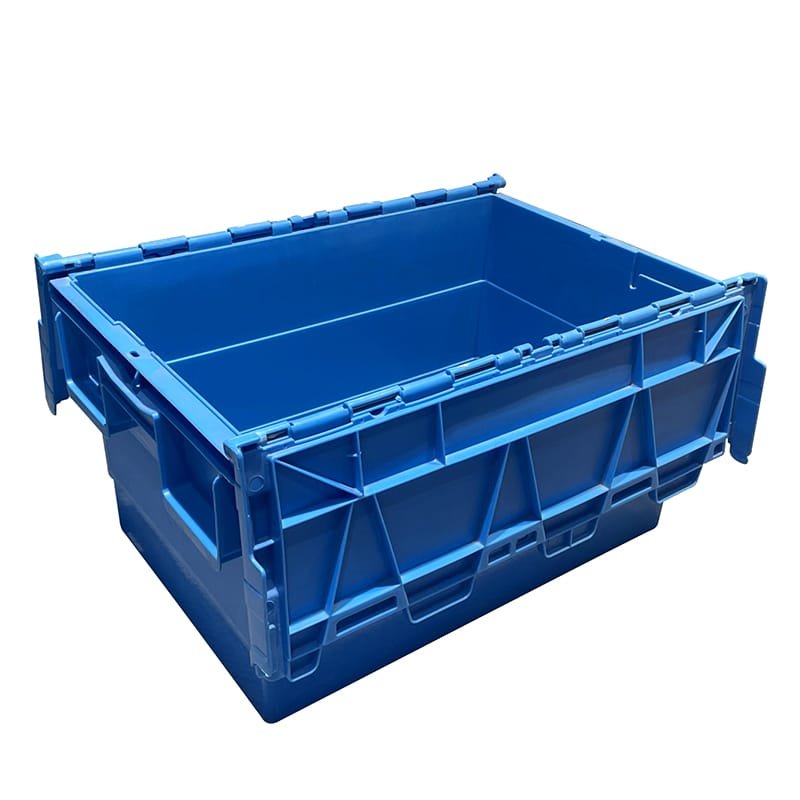
A highly secure stackable crate featuring interlocking lids, perfect for protecting high-value retail goods and locking out dust during transit.
Plastic Folding Crate
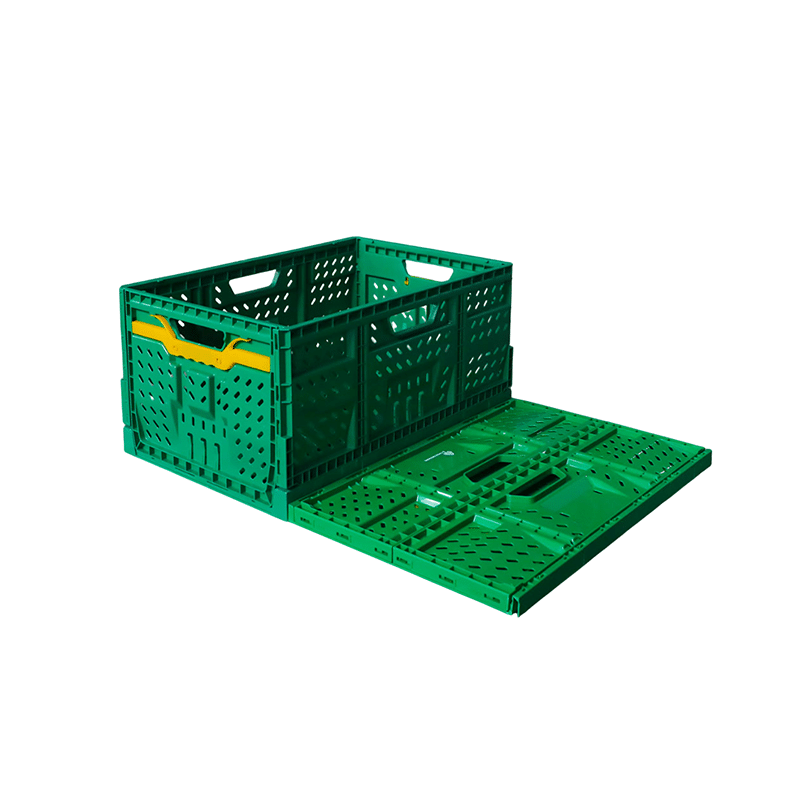
Combining rigid stacking strength with a collapsible space-saving design that collapses flat to reduce return-freight transport costs.
Plastic Turnover Crate
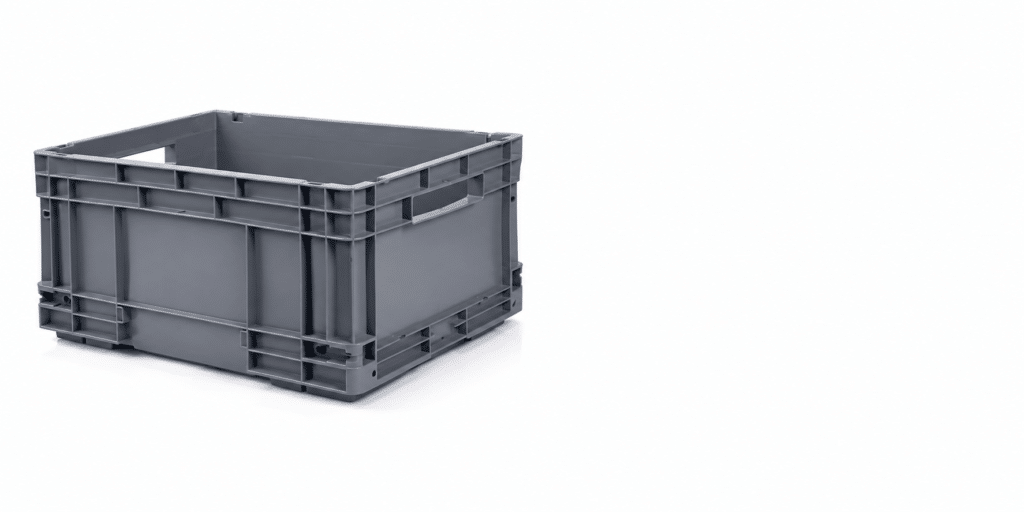
A straight-wall industrial workhorse optimized for high-speed internal plant handling and seamless automated conveyor tracking.
Plastic Nestable Crates
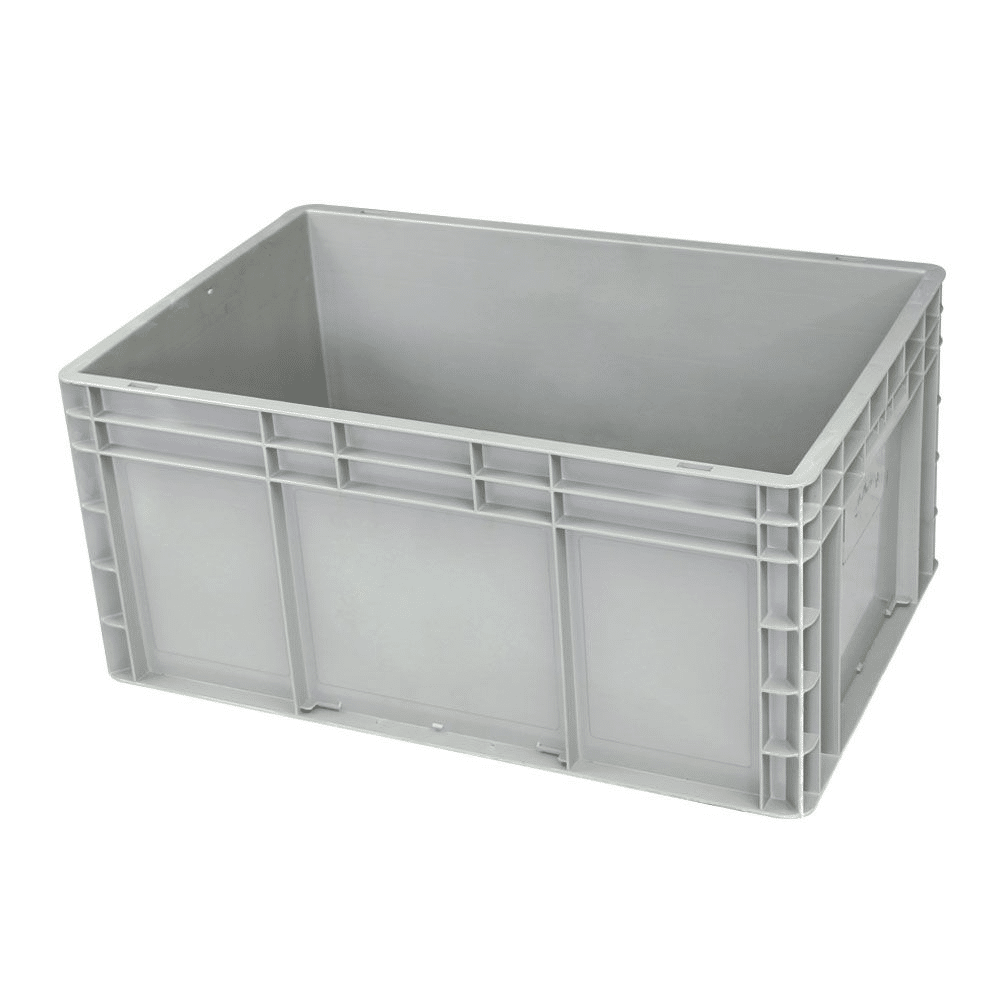
Cleverly designed to stack when full and nest closely when empty, saving up to 75% of your warehouse storage space.
Our global industrial supply chain specialists are ready to analyze your load requirements and warehouse environment to recommend the exact stackable plastic crates configuration that maximizes your operational ROI.
Materials & Performance of Stackable Plastic Crates
Our stackable plastic crates are produced using premium injection molding technologies to withstand intense industrial use.
| Performance Criteria | Technical Specification & Compatibility |
| PP / HDPE / PE Material | Available in Virgin HDPE for cold storage or Impact PP for rigid automated setups. |
| Impact Resistance | Reinforced corner structures prevent cracking from forklift impacts and drops. |
| UV Resistance | Formulated with special UV inhibitors to stop material fading during outdoor storage. |
| Corrosion Resistance | 100% immune to moisture, industrial cleaning chemicals, oils, and mild acids. |
| Food Grade Option | FDA-approved raw materials available, matching the standards of food grade plastic crates. |
| Anti-Static Option | Custom ESD surface resistivity treatments available for electronic assembly lines. |
| Temperature Resistance | Built to stay stable through extreme ranges from -40°C up to +70°C. |
| Load Capacity | Dynamic load capacities up to 50kg per crate, with static stack tracking up to 250kg. |
How to Choose The Right Stackable Plastic Crates?
Finding the perfect stackable plastic crates depends entirely on your specific material handling environment.
| Selection Factor | Industrial Requirement Matrix |
| Application | Choose ventilated walls for agriculture air circulation or solid walls for small industrial parts. |
| Capacity | Available in standard European sizes ranging from compact 15L bins up to high-volume 120L boxes. |
| Load Requirement | Check your stacking limits; heavy mechanical components require thick, reinforced ribbed bases. |
| Temperature | Deep-freezing blast tunnels require specialized virgin HDPE compounds to maintain impact strength. |
| Storage Method | Verify if your crates will be stored on pallet racks, automated carousels, or stacked directly on the floor. |
| Design Type | Select straight-wall boxes for space control, or collapsible plastic crates to save return-freight costs. |
| Grade Level | Specify food-safe polymers for direct harvest contact, or recycled eco-grades for closed-loop manufacturing. |
| Use Environment | Outdoor storage requires advanced UV protection, while indoor automated systems prioritize flat bases. |
The Ultimate Guide to Stackable Plastic Crates for Modern Enterprise Logistics
Key Takeaways
Stackable plastic crates are essential tools for maximizing vertical storage and improving supply chain efficiency.
Choosing between PP and HDPE depends heavily on your industry’s temperature and impact resistance requirements.
Implementing a standardized crate system significantly reduces packaging waste and product damage costs.
Proper maintenance and strategic selection guarantee a lifespan of 5 to 10 years for industrial B2B use.
Introduction to Warehouse Efficiency
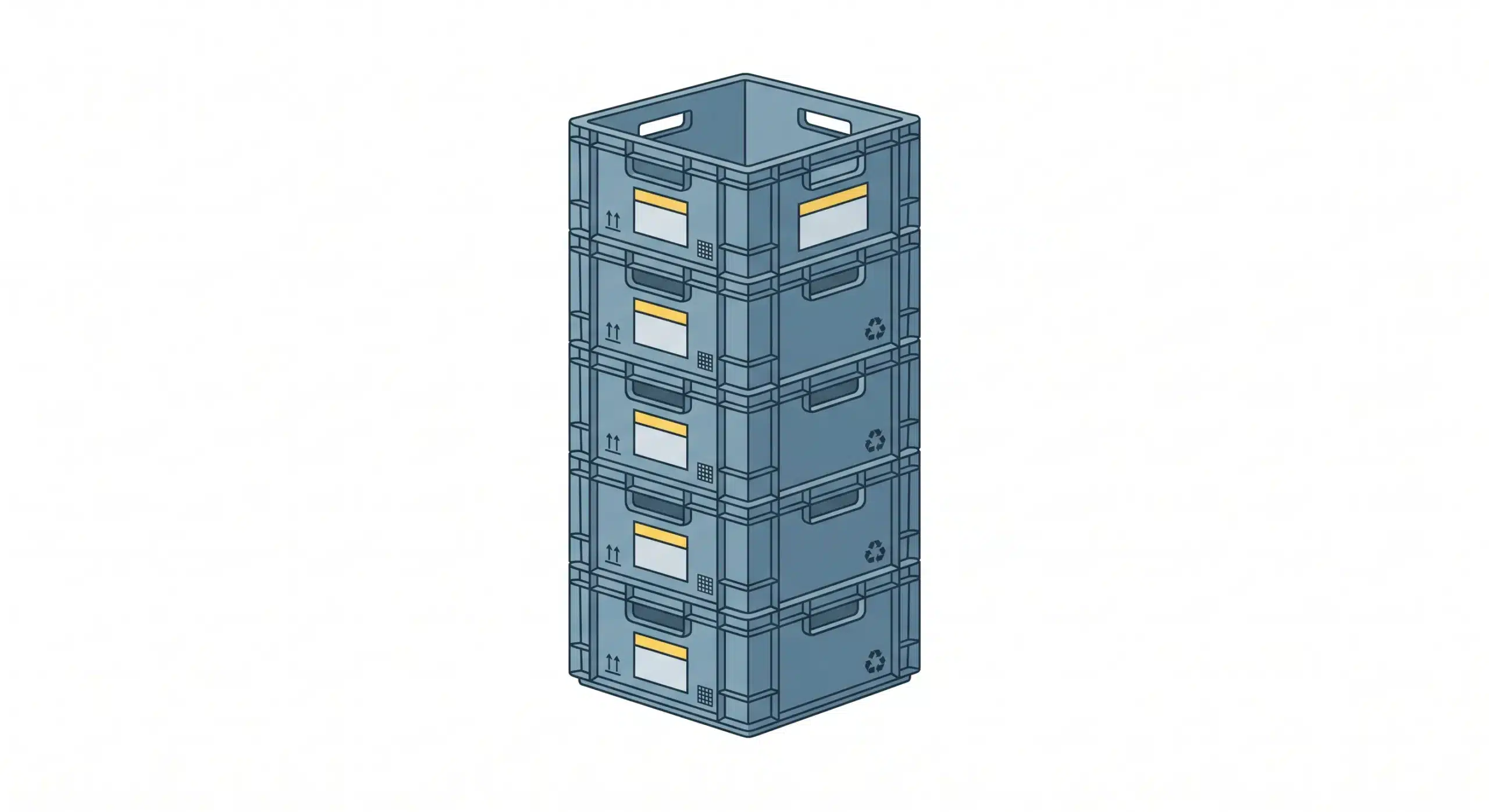
In the modern landscape of logistics and supply chain management, optimizing space and ensuring product safety are paramount. For enterprise owners and procurement specialists, selecting the right material handling solutions can directly impact the bottom line. Stackable plastic crates have emerged as the industry standard, replacing outdated cardboard and fragile wooden alternatives. These robust containers allow businesses to build secure vertical columns of inventory, effectively multiplying available floor space while protecting the contents within.
Why Do Supply Chains Rely on Stackable Plastic Crates?
The shift toward robust plastic logistics solutions is driven by a need for consistency, durability, and automation compatibility. Stackable plastic crates offer a uniform footprint, which is critical for automated storage and retrieval systems (AS/RS) and conveyor belts.
Enhanced Protection: Rigid walls protect fragile items from the crushing weight of overhead goods.
Ergonomics: Molded handles reduce workplace injuries during manual handling.
Standardization: Consistent sizing allows for predictable truck loading and palletization.
TIP: When integrating new containers into an existing automated facility, verify that the base design of the stackable plastic crates is compatible with your specific conveyor roller spacing to prevent jams.
What Material is Best for Your Industry?
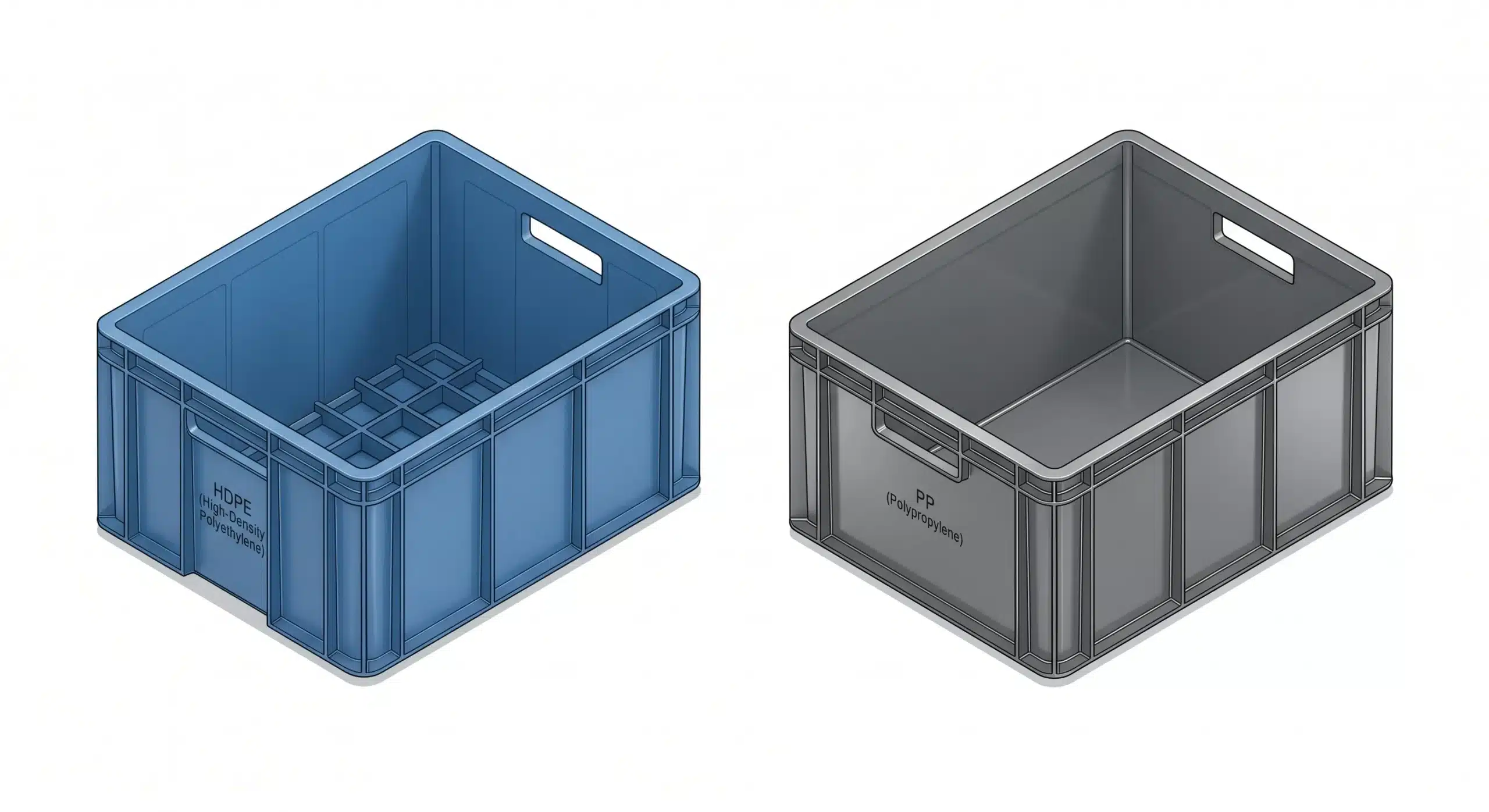
Understanding material science is crucial for procurement leaders. The two primary plastics used in manufacturing high-quality stackable plastic crates are High-Density Polyethylene (HDPE) and Polypropylene (PP).
| Plastic Type | Key Characteristics | Best Used For |
| HDPE | Excellent impact resistance, handles freezing temperatures well. | Cold chain logistics, agriculture, heavy manufacturing. |
| PP | Higher heat tolerance, slightly more rigid structure. | Automotive parts, high-temperature washing environments. |
For operations requiring specific certifications, purchasing standard plastic crates for warehouse storage made from virgin materials ensures compliance with international safety and hygiene standards.
How Does Design Impact Operational Costs?
The geometric design of your storage containers influences return logistics costs. Straight-walled stackable plastic crates offer the maximum internal volume for storage. However, if return transport space is a bottleneck, you must weigh the benefits of purely stackable designs against nestable or collapsible variants. Standardized footprints, such as the ISO 8611 standard plastic logistics crate, guarantee cross-compatibility across global supply networks, preventing costly repacking at distribution borders.
Straight-wall stacking: Best for closed-loop systems with short distances.
Ribbed exteriors: Provide extra strength for heavy loads without adding significant weight.
Ventilated sides: Essential for agricultural and food processing to maintain temperature control.
ROI and Cost Analysis for Enterprise
While the initial capital expenditure for high-quality stackable plastic crates is higher than single-use cardboard, the Return on Investment (ROI) is typically realized within 12 to 18 months. This is achieved through:
Zero single-use packaging purchases.
Significant reduction in product damage claims.
Faster handling times resulting in lower labor costs.
TIP: To accurately calculate your ROI, factor in the disposal fees of your current cardboard waste, which are entirely eliminated when switching to reusable stackable plastic crates.
Maintenance and Lifespan Optimization
To maximize the value of your stackable plastic crates, implement a regular cleaning and inspection schedule. Industrial washers can rapidly clean hundreds of crates per hour. Always inspect for deep gouges or stressed hinges (on collapsible models) to remove compromised crates from the fleet before they fail under a heavy load. With proper care, a premium crate from ENLIGHTENING will serve your supply chain reliably for years.
logistics moving crates FAQS
What is the difference between dynamic and static load capacity?
Dynamic load capacity refers to the maximum weight stackable plastic crates can safely hold while being moved (e.g., on a forklift). Static load capacity is the total weight the bottom crate can support when stacked securely and resting stationary on a level floor.
Can stackable plastic crates integrate with automated conveyor systems?
Yes, high-quality stackable plastic crates are specifically designed with smooth, reinforced bases and standard footprints to travel quietly and seamlessly across roller conveyors and automated sorting equipment.
Are these crates environmentally friendly?
Absolutely. ENLIGHTENING’s stackable plastic crates are designed for hundreds of trips, replacing thousands of single-use cardboard boxes. At the end of their operational lifespan, the polymer is 100% recyclable.