
Key Takeaways
- Commercial plastic crates are used for retail, warehouse, food, logistics, and distribution handling.
- The right crate depends on load weight, storage method, return flow, and cleaning requirements.
- Stackable crates save loaded storage space, while nestable and folding crates save empty return space.
- PP and HDPE are common materials for commercial plastic crates.
- ENLIGHTENING helps buyers match commercial plastic crates to real business use, not only catalog size.
Why Do Businesses Use Commercial Plastic Crates?
Businesses use commercial plastic crates because daily handling needs stronger, cleaner, and more reusable packaging than cartons. Retail stores, supermarkets, warehouses, food distributors, and e-commerce teams all move goods many times before the final sale or shipment.
Commercial plastic crates help keep products organized during this movement. They can hold packaged food, small consumer goods, bottled drinks, tools, spare parts, hardware, bakery products, or mixed warehouse stock. Compared with weak cartons, commercial plastic crates provide better shape stability and can be reused many times.
Common business uses include:
- Retail backroom stock handling
- Warehouse picking and order preparation
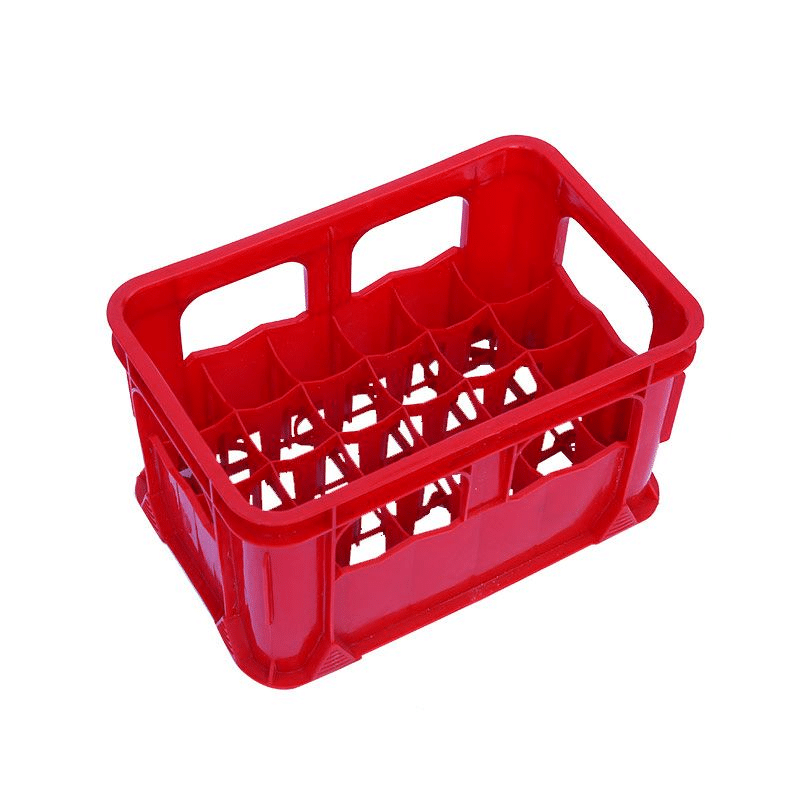
- Food and beverage distribution
- Supermarket replenishment
- E-commerce temporary storage
- Returnable logistics between sites
- Small parts and tool organization
For larger warehouse systems, warehouse storage crates are often used with shelves, carts, pallets, and picking stations.
What Problems Do Commercial Plastic Crates Solve?
Commercial plastic crates mainly solve problems caused by weak packaging, messy storage, poor space use, and repeated manual handling. These problems look small at first, but they affect daily warehouse speed and stock accuracy.
| Business Problem | How Commercial Plastic Crates Help |
|---|---|
| Broken cartons | Reusable plastic structure handles repeated movement |
| Mixed goods | Crates help separate SKUs, batches, or store orders |
| Poor stacking | Stronger walls support neater loaded storage |
| Empty container waste | Nestable or foldable crates reduce empty return volume |
| Hard cleaning | Plastic surfaces are easier to wash than paper packaging |
TIP: Do not choose commercial plastic crates only by outer size. Inner size and usable volume matter more for daily loading.
Which Commercial Use Cases Need Plastic Crates Most?
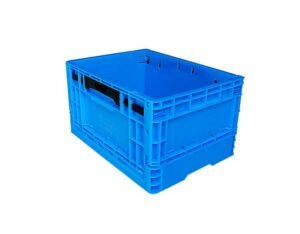
Commercial plastic crates are useful whenever goods move repeatedly inside a business system. They are especially valuable when cartons break too fast, when goods need cleaner handling, or when empty containers return after delivery.
Retail operations use commercial plastic crates to move stock from receiving areas to shelves. Food distributors use them for clean product handling. Warehouses use them for picking and storage. Logistics teams use them for returnable transport.
High-value applications include:
- logistics moving crates for delivery and transfer routes
- retail handling crates for stores and backroom operations
- fresh produce crates for fruit and vegetable handling
- cold chain food crates for chilled distribution
Stackable, Nestable, or Folding: Which Structure Fits Better?
Not all commercial plastic crates work the same way. The best structure depends on how your team uses the crate after loading and after unloading.
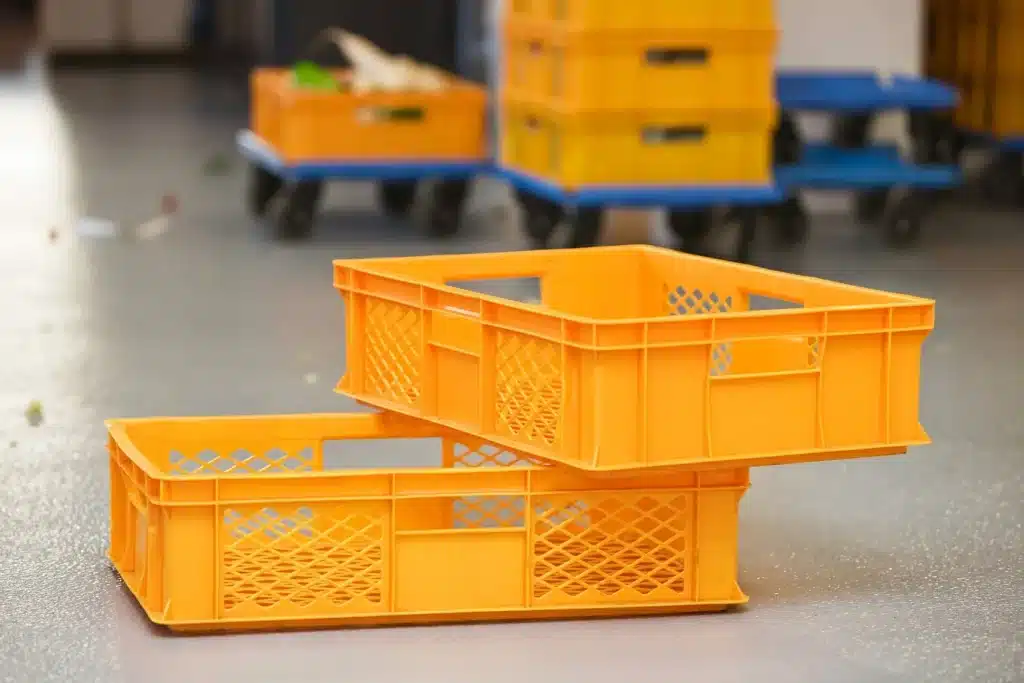
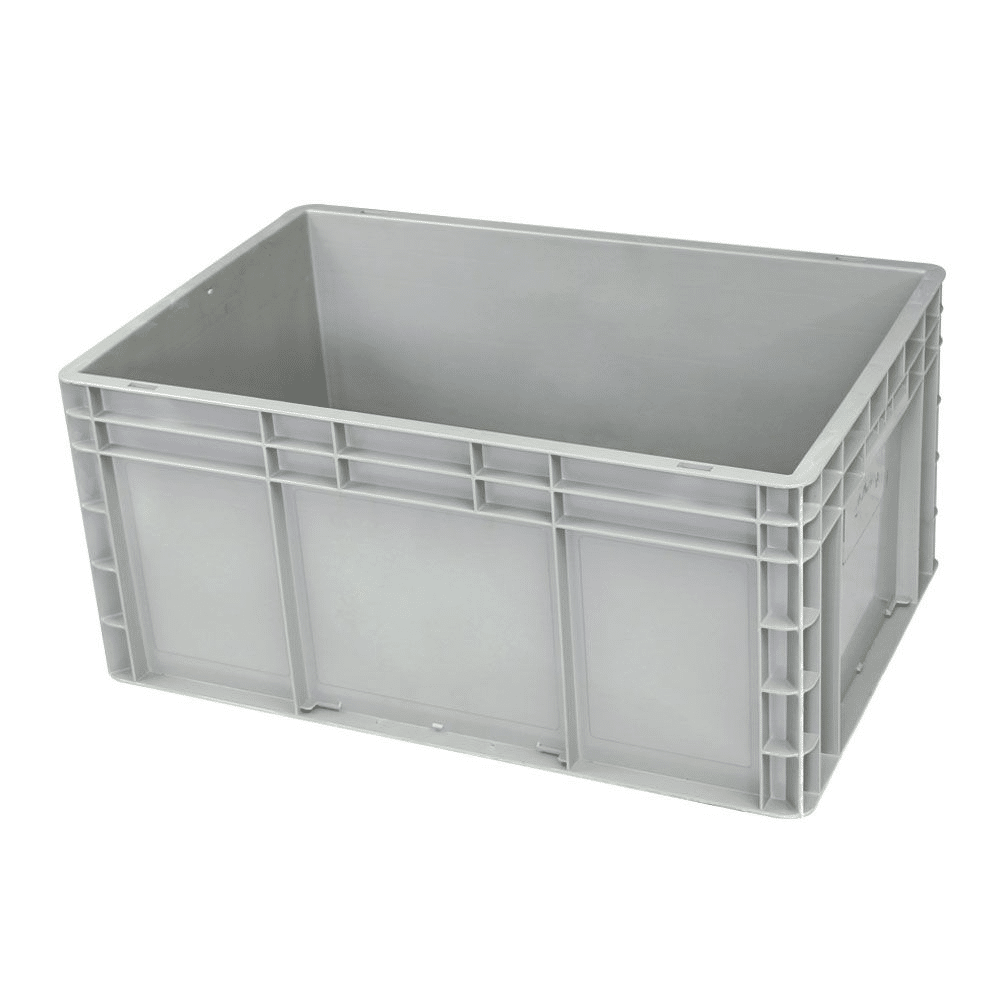
Stackable commercial plastic crates are better when loaded goods need stable vertical storage. They are suitable for warehouses, backrooms, and distribution centers where full crates stay stacked for picking or transfer.
Nestable commercial plastic crates are better when empty crates need to return in large quantities. Empty crates can fit into each other, which saves storage and vehicle space.
Folding commercial plastic crates are useful when freight cost and return space are major concerns. After unloading, the crate folds down and takes less room.
A simple selection guide:
| Structure | Best Use |
|---|---|
| Stackable | Loaded storage and stable warehouse stacking |
| Nestable | Empty returns and compact backroom storage |
| Folding | Return logistics and freight-saving systems |
| Attached lid | Closed storage and goods protection |
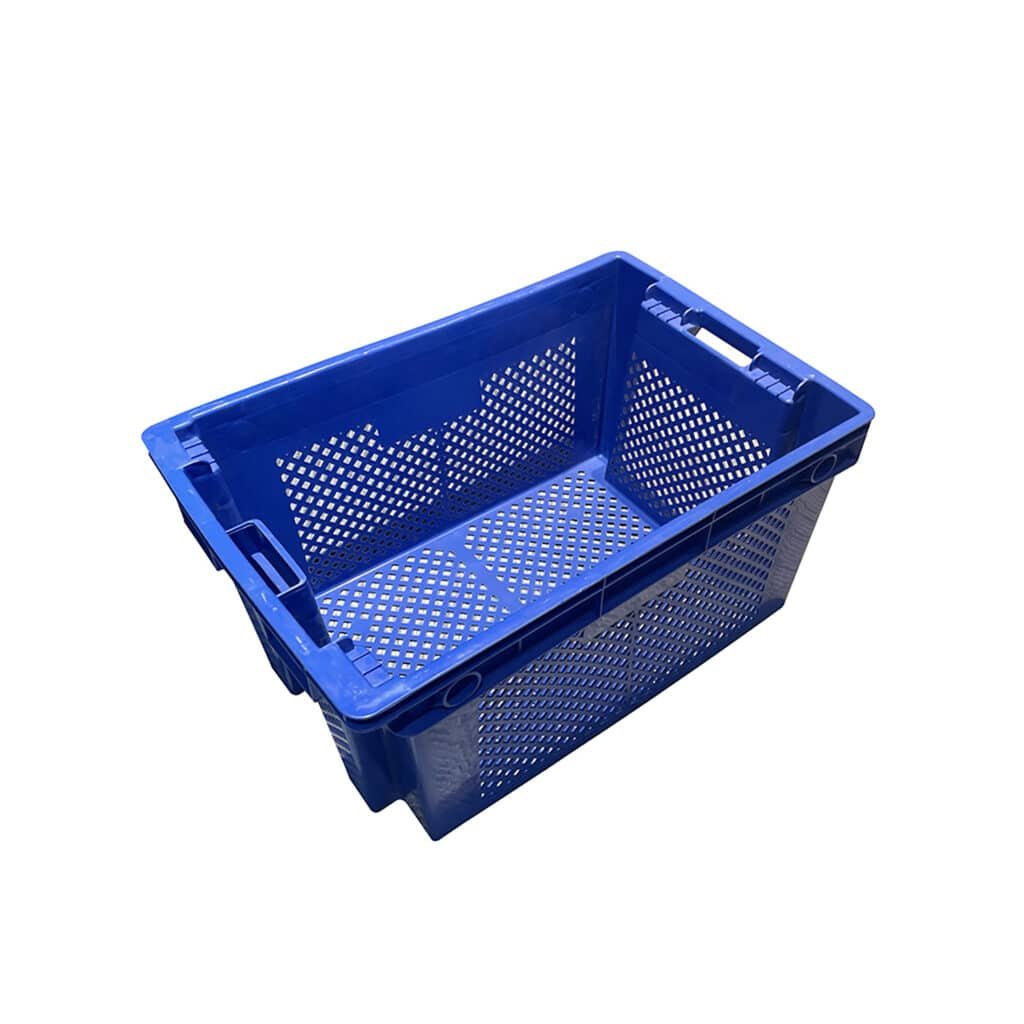
| Ventilated | Produce, bakery, and airflow needs |
For loaded warehouse storage, stackable plastic crates are usually the first option. For empty return flow, nestable plastic crates or collapsible plastic crates may be more suitable.
What Material Should Commercial Plastic Crates Use?
Most commercial plastic crates use PP or HDPE. PP gives good rigidity, which helps the crate keep its shape during stacking. HDPE gives better toughness and impact resistance, which helps when crates face rough transport or frequent loading.
Material choice should match your goods and working conditions. A food distributor may care more about easy cleaning and food-grade options. A logistics company may care more about impact resistance and return life. A retail warehouse may need a balanced crate that stacks well and remains easy to carry.
Basic material comparison:
| Material | Common Benefit | Suitable Use |
|---|---|---|
| PP | Rigid, clean, stable shape | Retail stock, picking, warehouse storage |
| HDPE | Tough, impact-resistant | Logistics, transport, rough handling |
| Food-grade PP/HDPE | Cleaner material option | Food, produce, bakery, and packaged goods |
| Anti-static material | ESD control | Electronics and sensitive parts |
| UV-stabilized material | Better outdoor resistance | Semi-outdoor storage and transport |
How Do Commercial Plastic Crates Improve Warehouse Work?
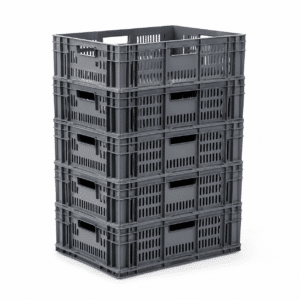
Commercial plastic crates improve warehouse work by making goods easier to sort, count, move, and store. A crate can hold one SKU, one order batch, one route, or one store replenishment group. This creates a clearer workflow for workers.
In daily warehouse use, commercial plastic crates help with:
- Faster SKU separation
- Better picking accuracy
- Cleaner temporary storage
- Easier movement between zones
- More stable stacking
- Less carton waste
- Better returnable packaging control
For high-frequency distribution, returnable plastic crates can help reduce repeated packaging purchases and support a cleaner closed-loop handling process.
TIP: If crates move between warehouse and store, choose a structure that works for both loaded delivery and empty return.
Are Commercial Plastic Crates Suitable for Food Handling?
Yes, commercial plastic crates can be suitable for food handling when the correct material and design are selected. Food-related crates should be easy to clean, stable when stacked, and suitable for the actual product type.
Food distributors often use commercial plastic crates for packaged food, produce, bakery goods, dairy items, bottled drinks, and cold chain handling. For fresh products, ventilated designs help airflow. For bakery and packaged food, smooth surfaces and easy cleaning are often more important.
Common food-related options include:
- ventilated plastic crates for airflow
- food grade plastic crates for cleaner handling needs
- meat and seafood plastic crates for wet and chilled environments
- plastic bakery trays for bread, pastry, and bakery distribution
How Should Buyers Confirm Load Capacity?
Load capacity depends on crate size, wall thickness, material, bottom design, rib structure, and stacking method. Commercial plastic crates do not all carry the same weight, even when they look similar.
Before bulk ordering, buyers should confirm three load points:
| Load Item | What It Means |
|---|---|
| Single crate load | Maximum safe weight inside one crate |
| Stacking load | Weight the bottom crate can bear when crates are stacked |
| Handling load | Real load during carrying, lifting, pushing, or vehicle transport |
For heavier commercial goods, heavy duty plastic crates or stronger rib designs may be better than standard light-duty crates.
What Should You Check Before Buying Commercial Plastic Crates?
Before buying commercial plastic crates, check how the crate will be used every day. A crate that looks good in a catalog may not fit your goods, shelves, carts, or transport route.
Important points to confirm:
- Outer dimensions
- Inner dimensions
- Usable volume
- Material grade
- Load capacity
- Stacking height
- Nesting or folding ratio
- Handle design
- Lid option
- Ventilation design
- Color options
- Logo or marking options
- Export packing method
- Sample availability
- Lead time for bulk orders
Buyers should also check whether the crate works with existing shelves, trolleys, pallets, conveyors, trucks, and store backroom layouts.
Why Choose ENLIGHTENING Commercial Plastic Crates?
ENLIGHTENING supplies commercial plastic crates for retail, food distribution, warehouse, logistics, and industrial stock handling. We help buyers select the right crate structure based on goods size, load weight, handling frequency, storage space, and return flow.
Instead of giving every buyer the same model, ENLIGHTENING compares different crate designs for your real working conditions. This helps reduce wrong purchases and gives your team commercial plastic crates that work better in daily use.
Commercial plastic crates are not just storage boxes. They are part of your product flow, picking process, delivery route, and returnable packaging system. A suitable crate can make your business storage cleaner, your handling smoother, and your packaging cost easier to control.