
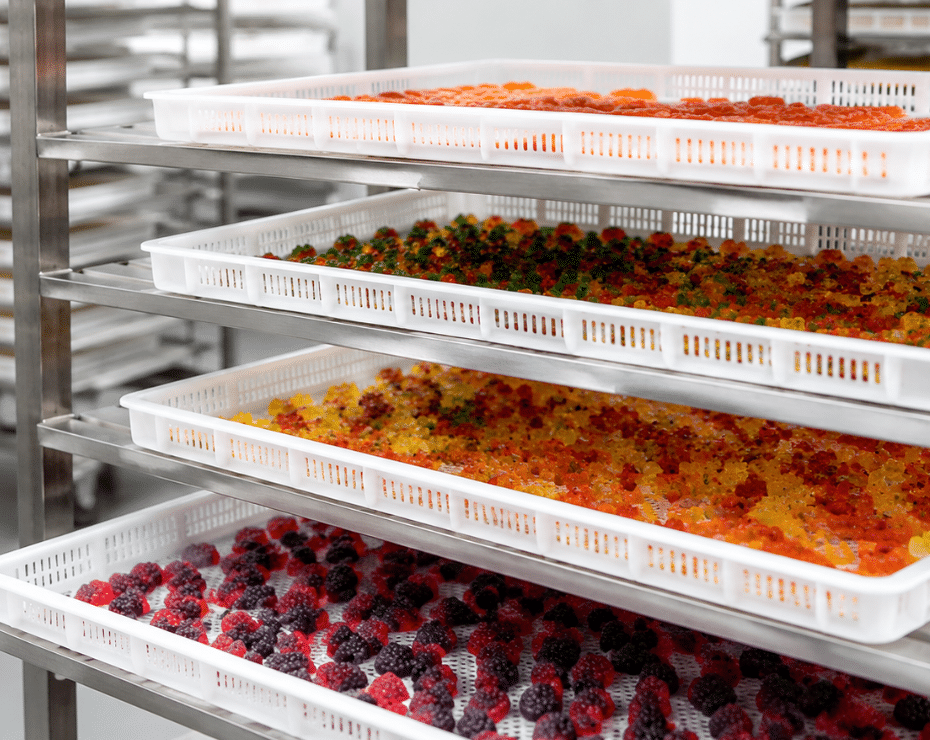


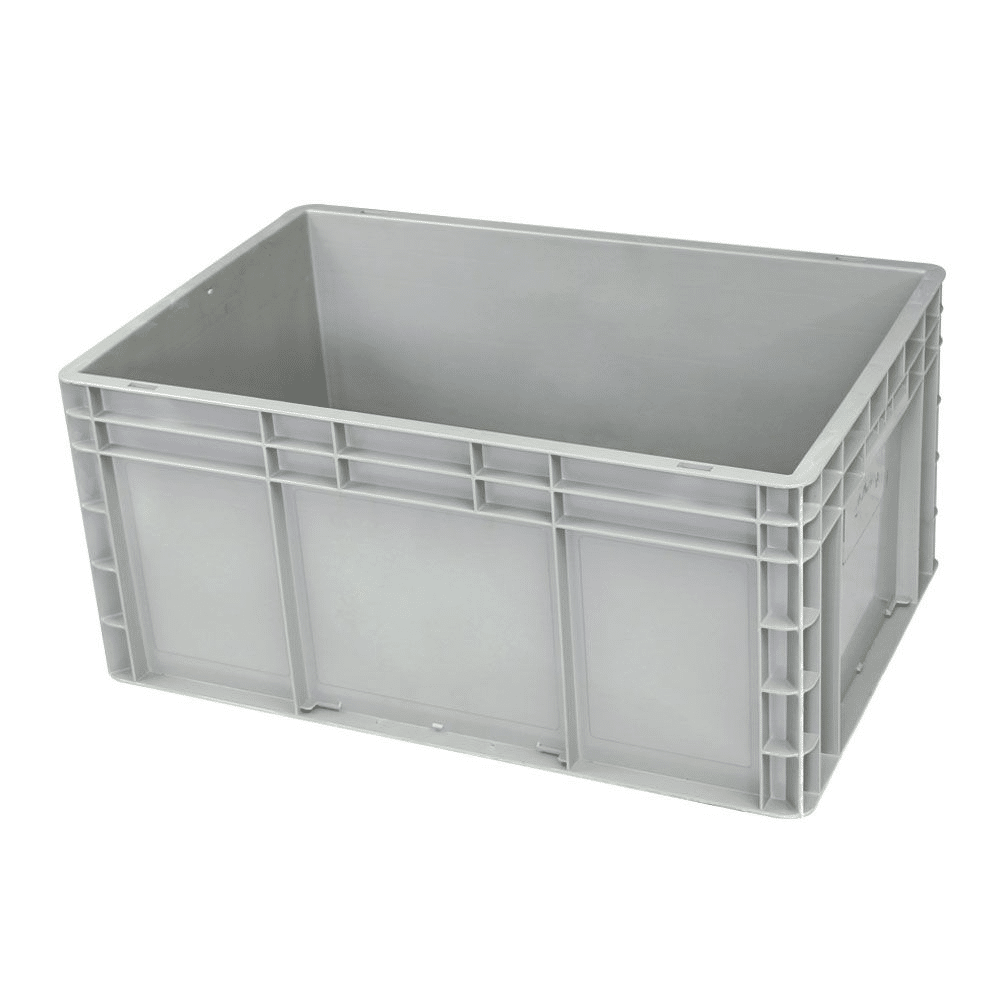
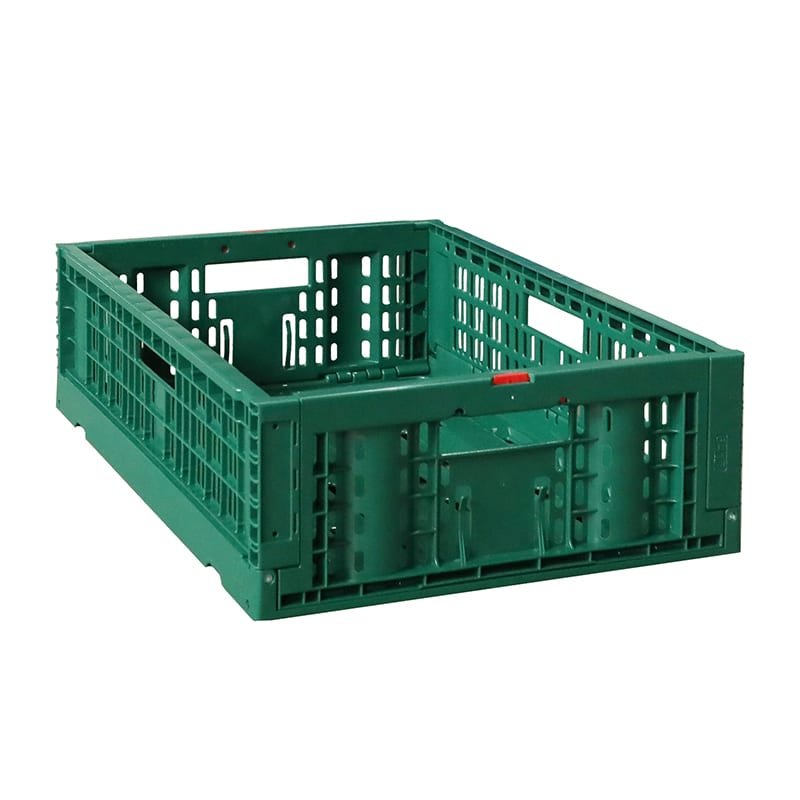
Gummy drying trays are plastic trays used to dry, cool, store, and move gummies during candy production. They are common in gummy candy factories, vitamin gummy lines, soft candy workshops, and food processing plants.
A good tray does more than hold candy. It must support airflow, stable stacking, smooth cleaning, and repeated factory handling. For B2B buyers, the key is not only tray price. The real value comes from fewer damaged gummies, cleaner batch control, and smoother daily production.
TIP: Before choosing a tray, confirm gummy weight per tray, drying time, rack size, and cleaning temperature.
Key Takeaways
| Point | Why It Matters |
|---|---|
| Food-grade material matters | Gummies may touch the tray during drying or cooling. |
| Ventilation affects drying | Better airflow helps reduce uneven drying. |
| Stable stacking saves space | Drying rooms often need many tray layers. |
| Smooth surfaces reduce residue | Sugar, oil, and color are easier to clean. |
| Custom size improves fit | Tray size should match racks, carts, and batch volume. |
Why Do Candy Factories Use Gummy Drying Trays?
Candy production needs clean and repeatable handling. After gummies are formed, cooled, coated, or separated from starch, they often need time to stabilize before packing. Gummy drying trays help keep each batch organized during this process.
They are useful because they:
- Hold gummies in a clean and separated way.
- Allow airflow around the product.
- Help workers move batches between rooms.
- Support stacking on racks and carts.
- Reduce direct handling of semi-finished candy.
For large factories, this becomes a daily production issue. If trays bend, crack, or stack poorly, the whole drying area becomes harder to manage.
What Makes a Good Gummy Drying Tray?
A good gummy drying tray should match food factory use, not just general storage. Gummies can be sticky, warm, soft, oily, or coated with sugar. The tray must handle these conditions without creating extra cleaning or handling problems.
Important features include:
- Smooth inner surface for easier product release.
- Ventilated base for better airflow.
- Strong ribs to reduce bending under load.
- Stackable edges for stable drying room storage.
- Food-grade material for candy processing.
- Easy-clean structure with fewer dirt-trap corners.
TIP: For sticky gummies, surface design is just as important as material.
How Do Gummy Drying Trays Support Better Airflow?
Drying depends on air movement. If the tray blocks too much air, some gummies may dry slower than others. This can create uneven texture, longer drying time, or extra product checking.
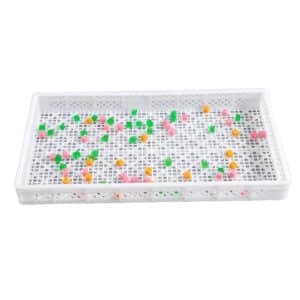
Ventilated gummy drying trays help air pass through the tray base and side areas. This supports more even drying, especially when trays are placed on carts or racks.
Airflow design should consider:
- Hole size and spacing.
- Tray depth.
- Gummy size.
- Stacking gap.
- Drying room airflow direction.
- Rack or cart structure.
A tray with too many holes may lose strength. A tray with too few holes may slow drying. The best option depends on your production process.
Which Material Is Better for Gummy Drying Trays?
Most gummy drying trays use PP or HDPE. Both materials are widely used in plastic food handling products. The best choice depends on tray size, factory temperature, cleaning method, and impact requirement.
| Material | Best Use | Main Benefit |
|---|---|---|
| PP | Food trays, dry rooms, general factory use | Good rigidity and clean surface. |
| HDPE | Heavier handling and colder areas | Better toughness and impact resistance. |
| PE | Some custom handling products | Flexible choice for special use cases. |
For candy factories, food-grade PP is often a practical choice when trays need good shape stability and clean appearance. HDPE can be useful when trays face stronger impact or colder storage.
How Much Load Can Gummy Drying Trays Carry?
There is no single load number for all gummy drying trays. Load capacity depends on tray size, wall thickness, rib design, material, and stacking height.
Buyers should confirm:
- Weight of gummies per tray.
- Number of trays per stack.
- Whether trays sit on racks or directly on each other.
- Whether workers move trays by hand or carts.
- Whether trays are used in warm drying rooms.
- Whether long-term stacking deformation matters.
| Use Condition | What to Check |
|---|---|
| Light candy drying | Tray weight and airflow are more important. |
| Heavy batch drying | Use stronger ribs and thicker walls. |
| Rack drying | Confirm rack spacing and tray edge support. |
| High stacking | Confirm long-term deformation performance. |
Do not choose only by static load. Candy trays often fail because of repeated stacking, side impact, or poor rack fit.
Are Food-Grade Gummy Drying Trays Necessary?
For most candy and gummy production, food-grade gummy drying trays are recommended. Gummies may touch the tray during drying, cooling, or transfer, so the tray material should match food handling needs.
Food-grade tray selection helps with:
- Cleaner production control.
- Better buyer confidence.
- Easier factory audits.
- Safer direct or indirect food contact.
- More professional export packaging preparation.
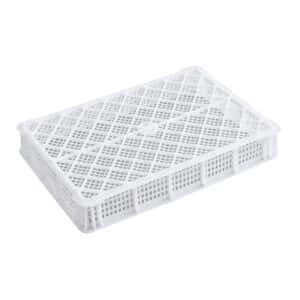
You can also consider related food handling products such as Food Grade Plastic Crates and Plastic Drying Tray for different production areas.
How Should You Clean Gummy Drying Trays?
Gummy production often leaves sugar, oil, starch, flavoring, or color residue. A smooth and easy-clean tray can reduce labor time between batches.
Cleaning should consider:
- Water temperature.
- Detergent type.
- Cleaning frequency.
- Tray hole design.
- Surface smoothness.
- Drying time after washing.
Avoid tray designs with too many deep corners if your factory changes flavors or colors often. These areas can trap residue and make cleaning slower.
TIP: If you run many gummy flavors, choose tray colors or batch marks to reduce mixing mistakes.
Can Gummy Drying Trays Be Customized?
Yes. ENLIGHTENING can customize gummy drying trays based on tray size, color, material, logo, hole design, stacking height, and rack compatibility.
Common customization options include:
- Custom length, width, and height.
- Food-grade PP or HDPE material.
- Tray color matching.
- Ventilation hole design.
- Stackable edge structure.
- Smooth or reinforced base.
- Logo or batch identification area.
- Material additives for special use.
Custom trays are useful when standard tray sizes do not fit your drying carts, shelves, racks, or packing flow.
How Do Gummy Drying Trays Fit Drying Racks and Carts?
Many candy factories use racks or carts to move trays into drying rooms. In this case, the tray must fit the rack size accurately. Poor fit can cause shaking, sliding, or wasted drying space.
Before ordering, confirm:
- Rack inner width and depth.
- Tray outer size.
- Slot spacing.
- Maximum stack height.
- Cart movement path.
- Door size of drying room.
- Cleaning and storage area size.
For factories that handle many food products, products such as Plastic Turnover Crate and Plastic Nestable Crates can also support internal movement and storage.
What Industries Use Gummy Drying Trays?
Gummy drying trays are mainly used in candy and food production, but the same tray logic can support other drying and cooling processes.
Common users include:
- Gummy candy manufacturers.
- Vitamin gummy producers.
- Soft candy factories.
- Jelly candy workshops.
- Supplement brands.
- Food OEM factories.
- Bakery and confectionery plants.
- Contract food manufacturers.
For nearby food categories, Plastic Bread Tray can support bakery handling, while Plastic Crate can support general factory transfer.
How to Compare Gummy Drying Tray Suppliers
When choosing a supplier, do not only compare price. Tray design affects cleaning, airflow, product loss, stacking safety, and daily worker handling.
A reliable supplier should help you confirm:
- Product size and weight.
- Drying room conditions.
- Material choice.
- Tray structure.
- Rack and cart fit.
- Cleaning method.
- Order quantity.
- Custom mold needs.
- Export packing method.
| Supplier Factor | Why It Matters |
|---|---|
| Factory experience | Better control of material and molding quality. |
| Custom ability | Helps match your rack and process. |
| Food-grade material option | Important for candy production. |
| Stable production | Reduces order delay risk. |
| Sample support | Helps test fit before bulk orders. |
ENLIGHTENING focuses on practical product matching. We help buyers choose trays based on real production use, not only catalog size.
Why Choose ENLIGHTENING Gummy Drying Trays?
ENLIGHTENING supplies plastic trays, crates, buckets, and handling products for food, logistics, agriculture, cleaning, and industrial use. For candy production, we focus on material safety, airflow, stacking stability, and cleaning convenience.
Our gummy drying trays can support:
- Food-grade production requirements.
- Custom tray size and structure.
- Drying rack and cart matching.
- Stable stacking in drying rooms.
- Easy cleaning after sticky products.
- Bulk supply for candy factories and distributors.
Send us your tray size, gummy type, batch weight, drying temperature, rack drawing, and target quantity. We will recommend a tray structure that fits your production line.