

Key Takeaways
- Fresh produce crates are best for fruit, vegetables, harvest handling, washing, sorting, cold storage, and retail distribution.
- Ventilated walls help improve airflow and water drainage.
- Stackable, nestable, and collapsible designs solve different storage and return logistics problems.
- Food grade material is important when crates contact unpacked produce directly.
- ENLIGHTENING can supply fresh produce crates for farms, distributors, wholesalers, and supermarket supply chains.
TIP: For most produce buyers, crate structure matters more than color. First confirm ventilation, stacking strength, empty return space, and food-contact requirements.
Why Do Farms and Distributors Use Fresh Produce Crates?
Fresh produce crates help businesses move products from the field to the customer with fewer handling problems. Compared with cardboard boxes or wooden boxes, plastic fresh produce crates are stronger, washable, and more suitable for repeated use.
Main business benefits include:
- Better airflow for fresh fruit and vegetables
- Faster handling during harvesting and sorting
- Cleaner storage in packing houses and cold rooms
- Stronger stacking during warehouse and truck transport
- Lower packaging waste in returnable logistics systems
Many buyers also use vegetable and fruit plastic crates for farm collection, wholesale markets, and supermarket delivery. When the produce needs strong airflow, ventilated farm plastic crates are usually a better match.
Where Are Fresh Produce Crates Commonly Used?
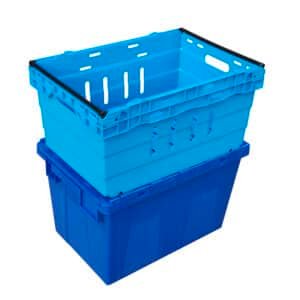
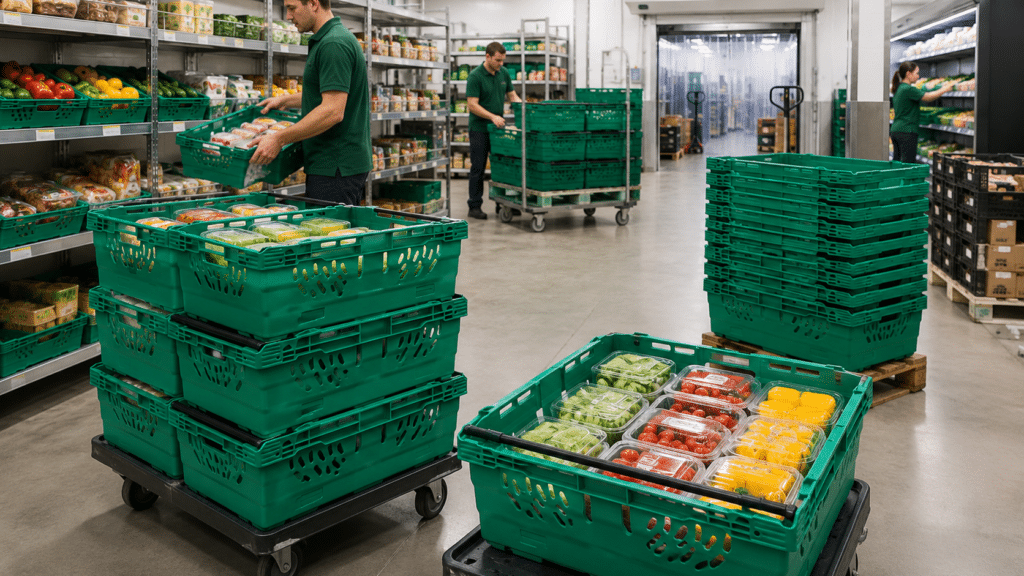
Fresh produce crates can be used in many parts of the agricultural supply chain. The same crate may be used for harvesting, sorting, cooling, storage, and delivery if the structure is suitable.
| Application Area | Main Requirement | Suitable Crate Feature |
|---|---|---|
| Farm harvesting | Fast picking and easy carrying | Lightweight ventilated structure |
| Packing house | Sorting, washing, temporary storage | Stackable and washable design |
| Cold storage | Airflow and stable stacking | Ventilated walls and strong corners |
| Wholesale market | Repeated loading and unloading | Impact-resistant plastic body |
| Supermarket delivery | Clean and organized supply | Stackable or bale arm design |
| Return logistics | Lower empty return volume | Nestable or collapsible design |
Fresh produce crates are especially useful when buyers need one packaging system for many handling steps.
TIP: If your crates return empty after delivery, nesting or folding structure can reduce return freight volume.
What Makes a Good Fresh Produce Crate?
A good fresh produce crate should protect the product and support the workflow. It should not only look strong. It should match your produce type, handling method, storage environment, and transport route.
Key features to check:
- Ventilated side walls: Help airflow and water drainage.
- Smooth inner surface: Reduces scratches on fruit and vegetables.
- Strong corner structure: Supports stable stacking.
- Easy-clean design: Helps maintain hygiene in food handling areas.
- Standard size options: Makes warehouse storage and truck loading easier.
- Reusable material: Supports repeated use across many supply cycles.
For buyers handling washed goods or food processing materials, food grade plastic crates are a better option than general industrial crates.
Stackable, Nestable, or Collapsible: Which Type Should You Choose?
Different crate structures solve different supply chain problems. Fresh produce crates should be selected according to how the crates are stored, transported, and returned.
| Crate Type | Best For | Main Benefit |
|---|---|---|
| Stackable crates | Full-load storage and delivery | Stable vertical stacking |
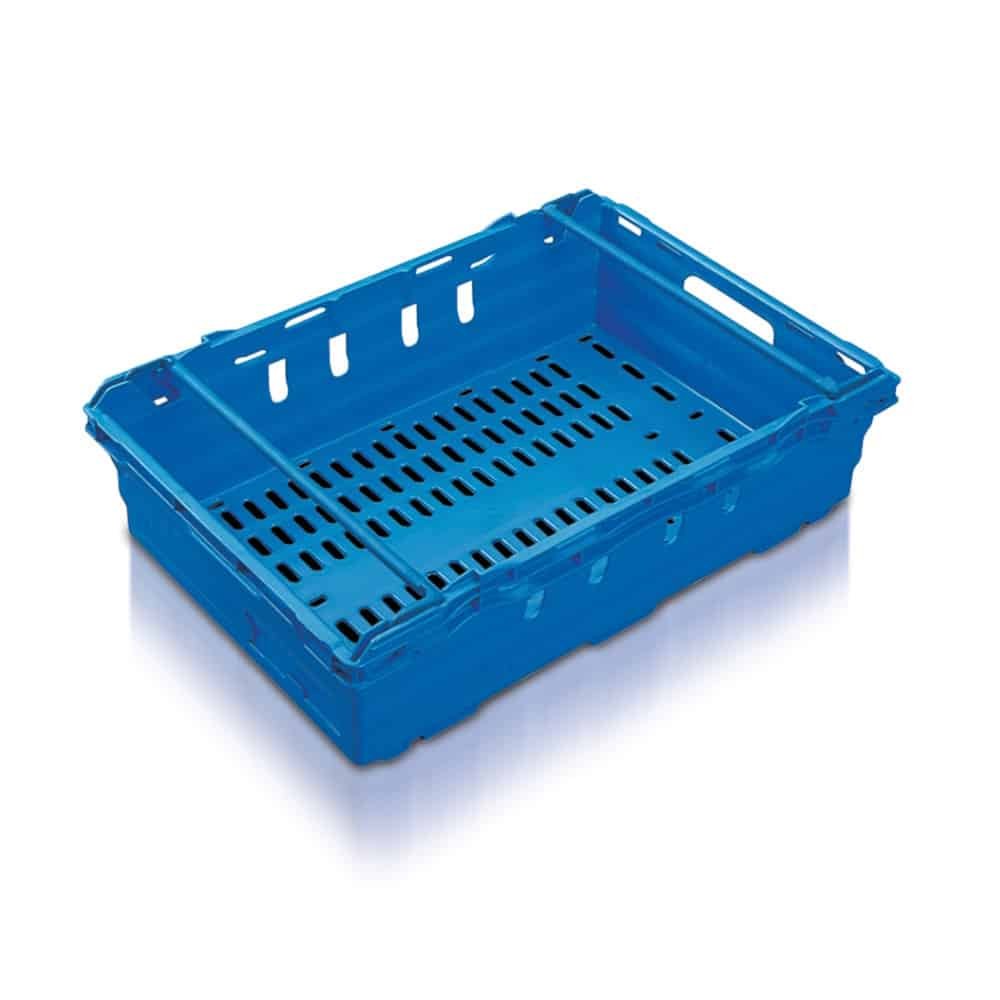
| Nestable crates | Empty return transport | Saves warehouse and truck space |
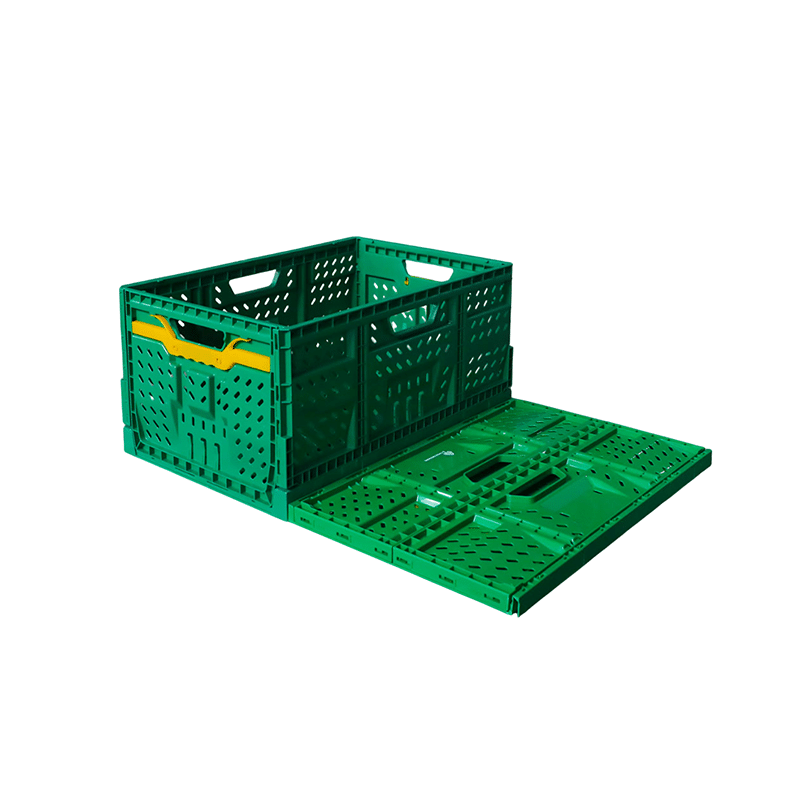
| Collapsible crates | Closed-loop retail logistics | Maximum empty-space reduction |
| Bale arm crates | Supermarkets and produce distribution | Stack when full, nest when empty |
| Turnover crates | Daily farm and warehouse handling | Simple, strong, reusable design |
If your business moves goods in one direction only, stackable fresh produce crates may be enough. If your crates return to the farm, packing house, or warehouse, nestable or collapsible crates can be more cost-effective.
Related product types include stackable plastic crates, nestable plastic crates, and collapsible plastic crates.
How Do Fresh Produce Crates Help in Cold Chain Handling?
Cold chain operations need airflow, clean surfaces, and stable stacking. Fresh produce crates with ventilated walls allow cold air to move around fruit and vegetables more easily than closed boxes.
Fresh produce crates help cold chain teams by:
- Supporting faster cooling after harvest
- Reducing moisture buildup
- Improving visibility during storage
- Making stacked goods more stable
- Helping workers move products faster
For refrigerated transport and cold rooms, buyers often compare fresh produce crates with cold chain food crates or cold chain transport crates, depending on product type and temperature requirements.
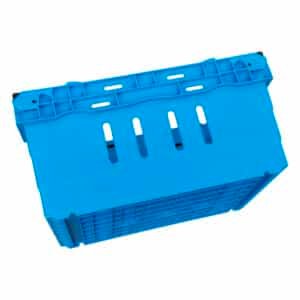
TIP: For cold rooms, do not only check crate size. Also check airflow, stacking height, and whether the plastic material stays tough at low temperatures.
What Materials Are Best for Fresh Produce Crates?
Fresh produce crates are commonly made from PP, HDPE, or PE. The best material depends on the working environment.
| Material | Main Strength | Common Use |
|---|---|---|
| PP | Good rigidity and stacking strength | Packing houses, warehouses, retail distribution |
| HDPE | Strong impact resistance and flexibility | Farm handling, cold storage, heavy movement |
| PE | Tough and flexible performance | Outdoor handling and general produce logistics |
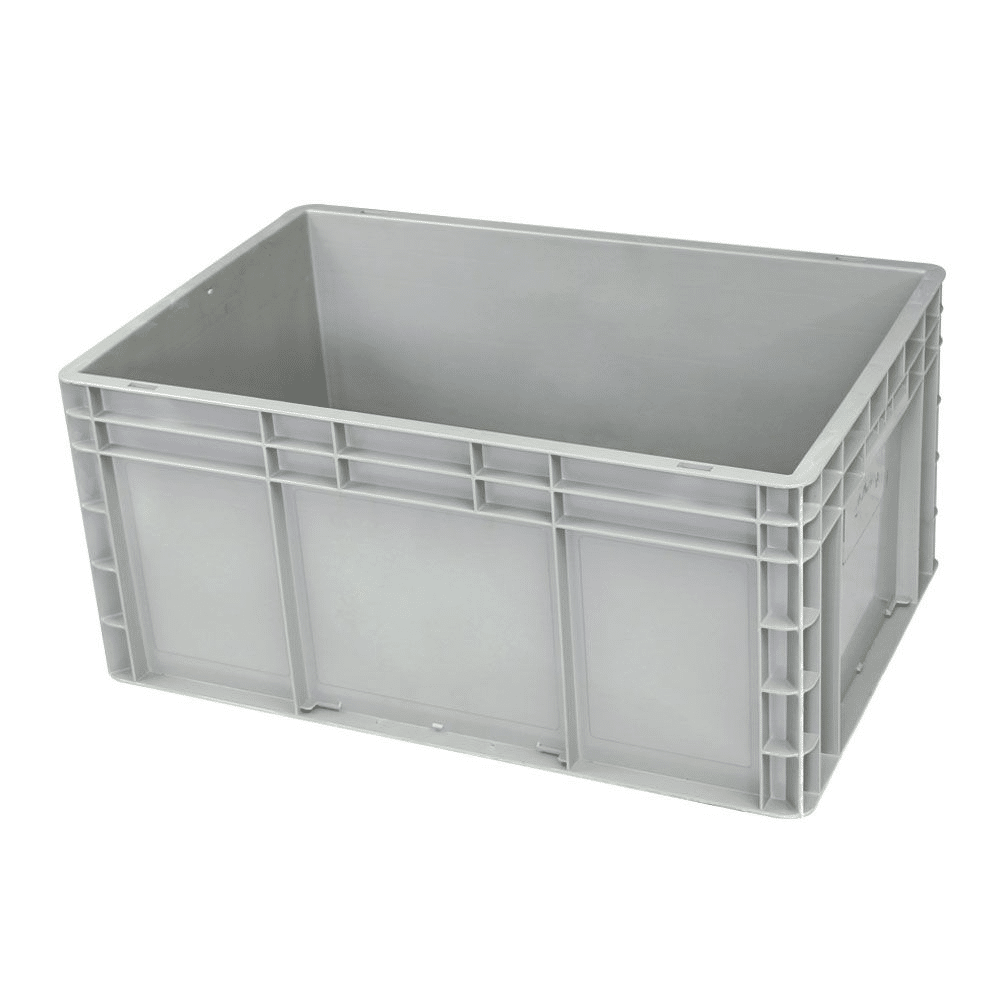
Food-contact use should be confirmed before bulk orders. If fruit or vegetables directly touch the crate, food grade material is recommended. If the crate is only used for packed goods, industrial grade material may be enough.
Fresh produce crates can also use UV-resistant material when used outdoors for long periods. This is helpful for farms, open markets, and outdoor storage areas.
How Much Load Capacity Do Fresh Produce Crates Need?
Load capacity depends on crate size, wall thickness, corner strength, base design, and stacking height. Buyers should confirm both the load per crate and the stacking load in real use.
Common buying checks:
- Weight of produce per crate
- Number of stacked layers
- Storage time under load
- Truck vibration during transport
- Forklift or manual handling method
- Temperature during storage and delivery
A small crate for delicate fruit needs different strength than a large crate for potatoes, onions, or cabbage. Fresh produce crates should be tested or selected based on real loading conditions instead of only size.
Why Are Ventilated Fresh Produce Crates Important?
Ventilated fresh produce crates allow air and water to move through the crate. This is important for many fruit and vegetable products, especially after harvesting or washing.
Ventilation helps with:
- Heat release after field collection
- Better airflow in cold rooms
- Faster drainage after washing
- Lower moisture buildup during temporary storage
- Easier visual inspection of produce
For leafy vegetables, tomatoes, peppers, citrus, apples, and similar products, ventilation is often one of the most important crate features.
How Do Fresh Produce Crates Support Wholesale and Retail Distribution?
Wholesale and retail supply chains need crates that can move through many hands without failing. Fresh produce crates support repeated handling from farms to warehouses, then to stores or markets.
For distributors, key benefits include:
- Standardized loading
- Faster counting and sorting
- Cleaner display and storage
- Better returnable packaging control
- Lower replacement rate compared with single-use packaging
When the operation uses a closed-loop system, returnable plastic crates can help reduce long-term packaging cost. For retail handling, supermarket crates with bale arms are also useful because they can stack when loaded and nest when empty.
What Should Buyers Confirm Before Ordering?
Before ordering fresh produce crates, buyers should confirm practical details instead of only asking for the lowest price.
Important questions include:
- What produce will be packed?
- Will the produce touch the crate directly?
- What is the loading weight per crate?
- How high will the crates be stacked?
- Will the crates be used in cold storage?
- Will empty crates return after delivery?
- Do you need food grade material?
- Do you need custom color, logo, or size?
For food processing and produce packing lines, buyers may also compare fresh produce crates with plastic containers for food processing to match hygiene and workflow needs.
TIP: For large orders, request samples first. Test stacking, handling, cleaning, and cold storage performance before confirming bulk production.
Why Source Fresh Produce Crates from ENLIGHTENING?
ENLIGHTENING supplies fresh produce crates for farms, wholesalers, food processors, cold chain companies, and retail distribution teams. We help buyers choose crate type by application, load, material, storage method, and return logistics needs.
You can source standard fresh produce crates or request support for custom color, logo, material, and bulk supply plans. For buyers building a full agricultural handling system, ENLIGHTENING can also recommend related crate types such as agricultural harvest plastic crates and commercial plastic crates.
Fresh produce crates should make your handling process easier, cleaner, and more repeatable. The right crate helps protect produce, reduce waste, and support stable supply from farm to market.