
Get Our Best Quotation
ENLIGHTENING will never abuse, misuse, sell, or improperly disclose the information you submit via our forms.
Anti Static Plastic Crates | Premium ESD Safe B2B Supply
Secure your electronics supply chain with anti static plastic crates from ENLIGHTENING. High-performance, durable bulk ESD containers for global logistics.
- Permanent ESD Shielding Protection
- Industrial Grade Carbon Fortification
- Automated System Physical Compatibility
Ideal Applications for Stackable Plastic Crates
Engineered specifically to safely dissipate electrical charges and prevent catastrophic component failure in high-tech industrial environments.
Perfect for storing sensitive microchips safely alongside premium antistatic plastic buckets to keep workspaces clean and static-free.
Provides reliable, grounded storage for vehicle control modules alongside rugged automotive parts crates.
Safeguards delicate monitoring equipment when integrated with clean medical supply plastic crates during production.
Protects complex navigation sensors from static damage when deployed next to high-durability heavy duty industrial plastic crates.
Ensures continuous safety across rapid intermodal sortation setups together with specialized logistics moving crates.
Prevents electrostatic particle attraction when paired with certified cleanroom plastic containers on racks.
Delivers secure, uncompromised shielding for military communication hardware when used with industrial heavy duty transport crates.
Addressing Critical Electronics Logistics Pain Points
Experiencing sudden electronic component failure during rapid warehouse transit? Unseen static shocks destroy fragile circuit boards, but organizing materials in protective containers alongside heavy duty plastic crates keeps inventory completely safe from damage.
Dealing with high dust attraction that ruins sensitive electronic assemblies? Standard storage pails build up static and attract contaminants, but switching your material handling near dependable industrial plastic crates guarantees static dissipation and cleaner parts.
Worried about container wall buckling during high-density warehouse stacking? Weak bins bend under heavy loads, making it vital to pair reliable ESD pails with structural stackable plastic crates to preserve vertical space safely.
Frustrated by severe component damage inside moving e-commerce fulfillment lines? Sudden friction during sorting creates dangerous electrostatic build-up, rendering a reliable setup next to an E-commerce shipping plastic turnover box essential for full tracking safety.
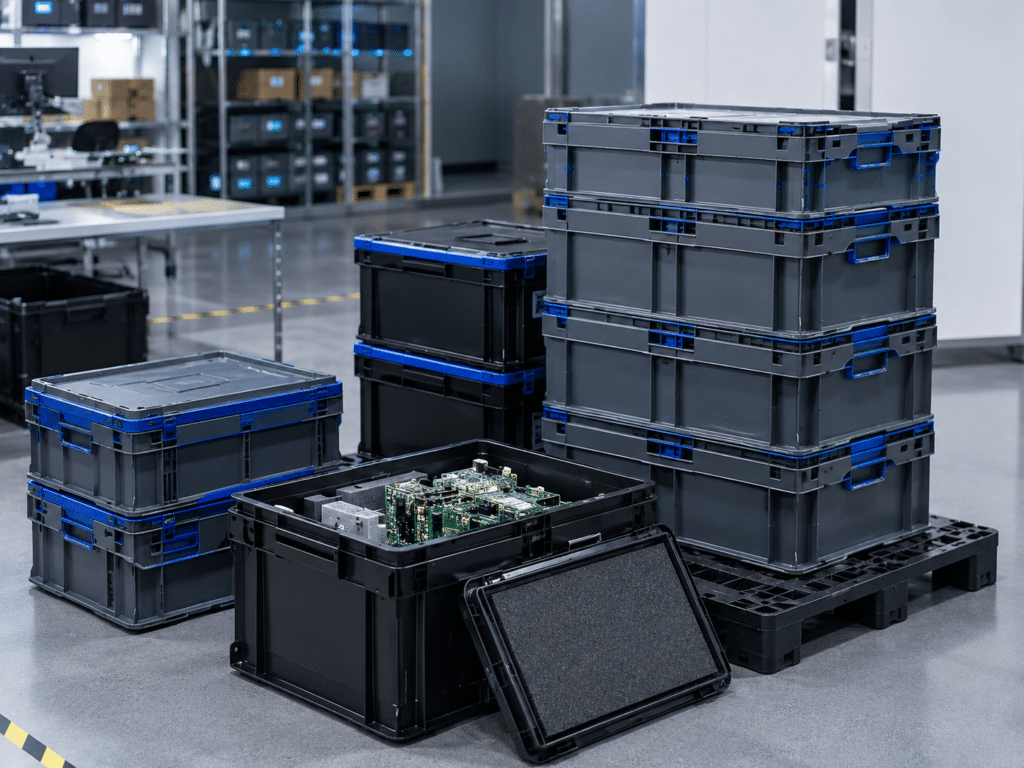
Recommended Products for Industrial Supply Chains
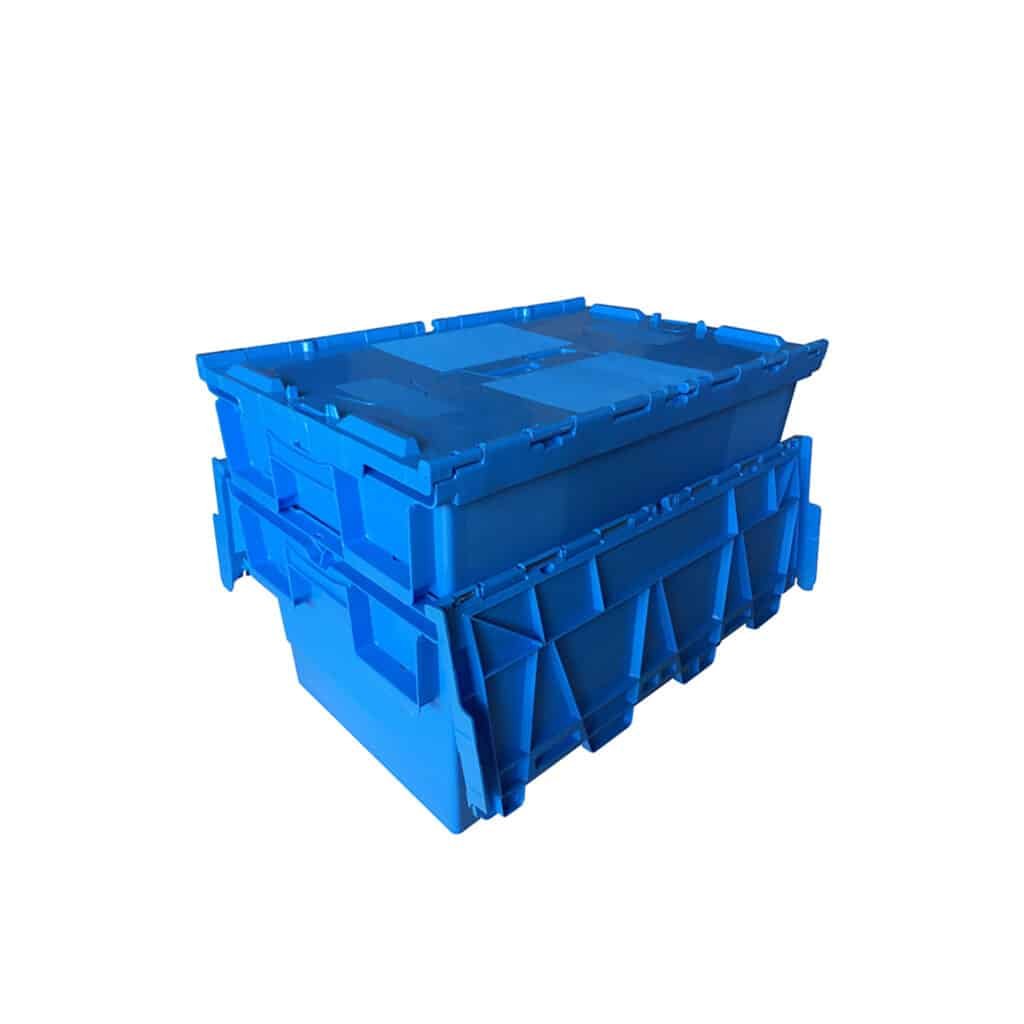
Attached Lid Container
Heavy-duty protective tote featuring heavy secure integrated lids to keep expensive products completely dust-free and safe.
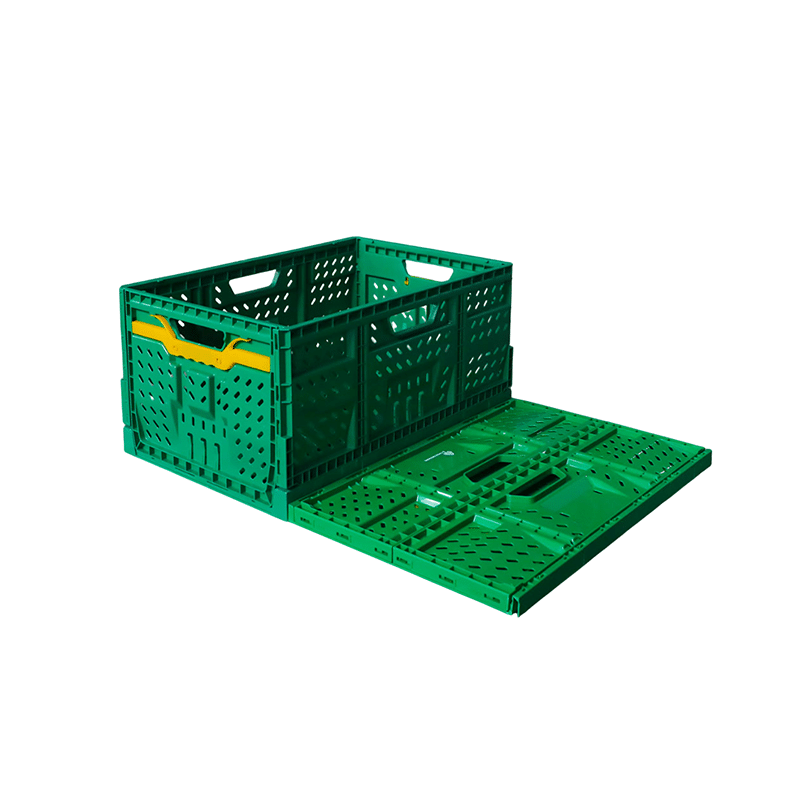
Plastic Folding Crate
Smart collapsible design that maximizes return transport space efficiency while maintaining reliable structural stability
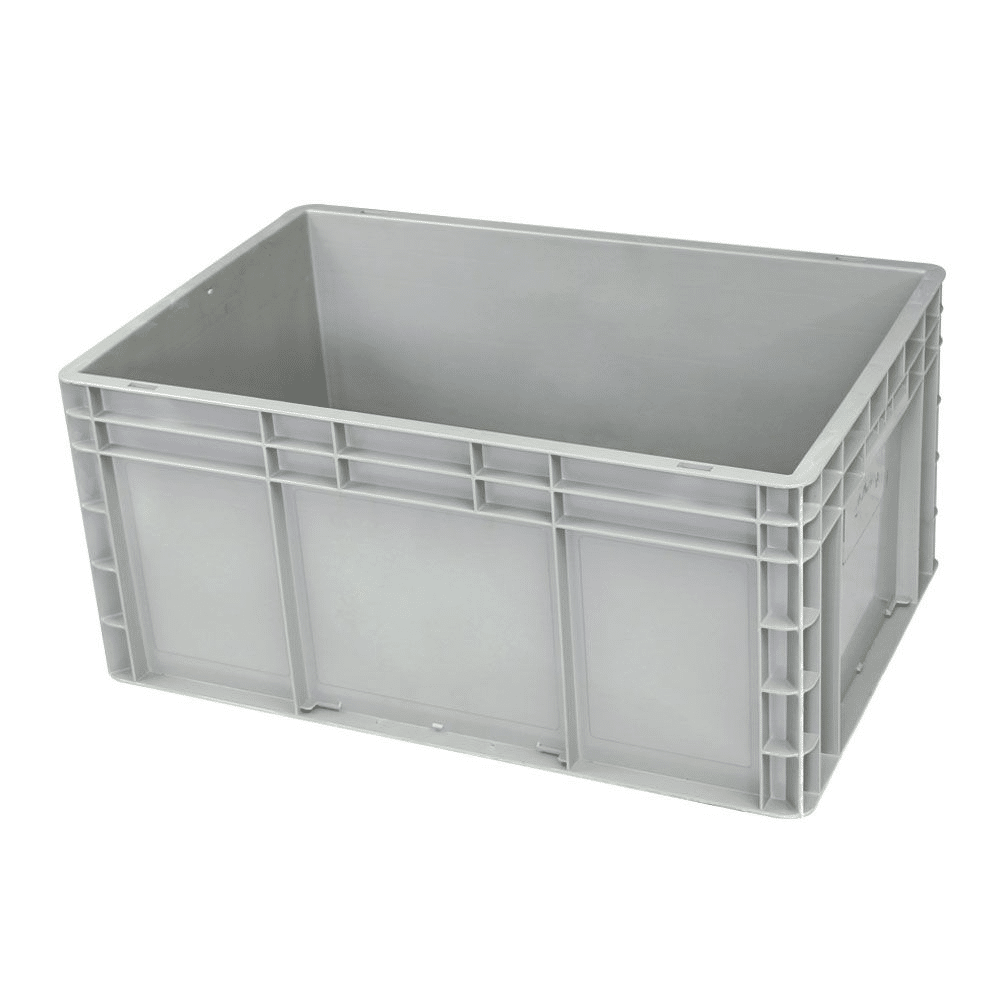
Plastic Turnover Crate
Rugged open-top design optimized for fast, repetitive material handling across automated distribution loops.
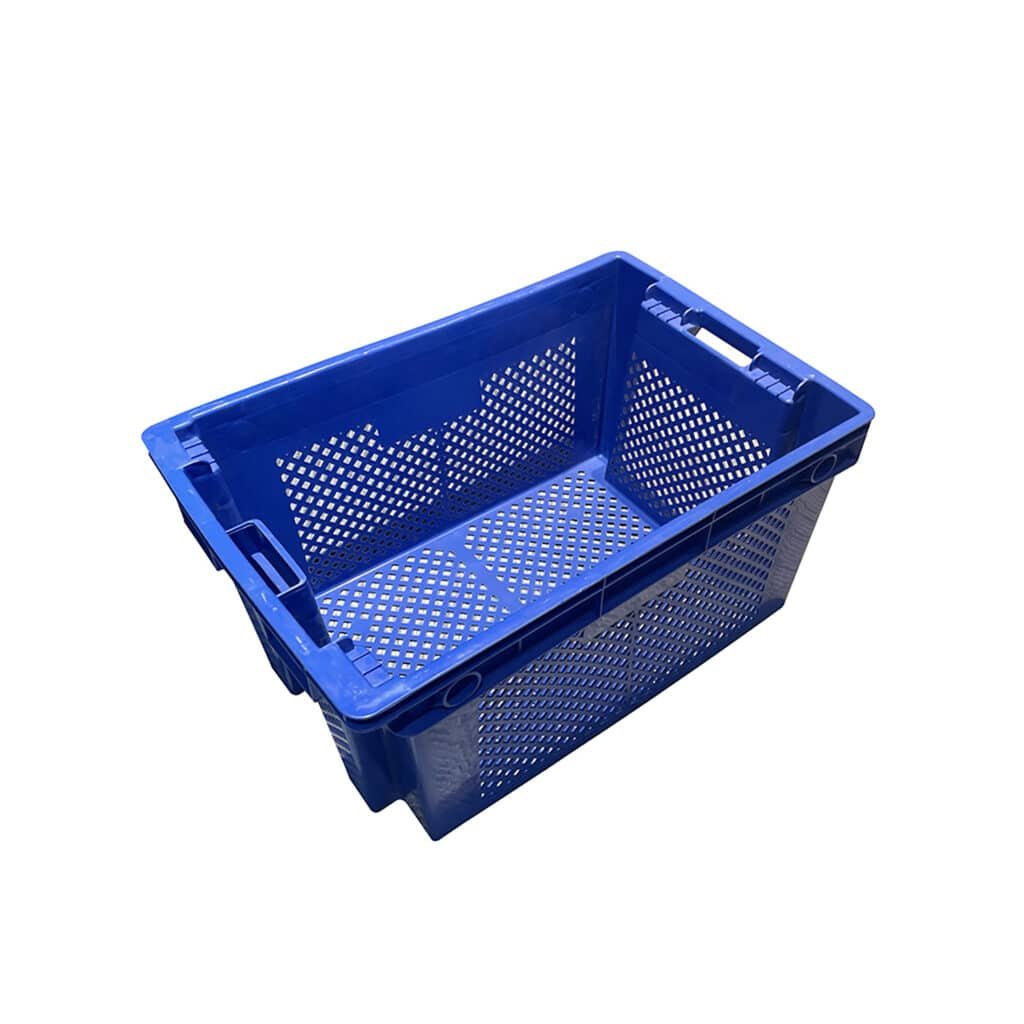
Plastic Nestable Crates
Tapered walls that allow empty units to slide together smoothly, dropping return shipping costs.
Contact ENLIGHTENING today, and our technical sales engineers will customize your surface resistivity and sizing parameters to build the ultimate static-safe container solution for your manufacturing facility.
Material Engineering & Performance Analytics
Our ESD protection systems are manufactured using specialized conductive polymer compounds to guarantee immediate static dissipation under harsh industrial conditions.
| Material Evaluation Attribute | Polypropylene (PP) Performance | High-Density Polyethylene (HDPE) Performance | Polyethylene (PE) Performance |
| Material Formulation | Ideal base for conductive carbon additive | High structural density option | High flexibility base resin |
| Impact Resistance | High stiffness; strong drop protection | Superior shock absorption | Flexible under impact |
| UV Resistance | Indoor optimized; requires additives | Inherently weatherable | Moderate outdoor lifespan |
| Corrosion Resistance | Resists processing oils and solvents | Outstanding industrial chemical resistance | Stable against mild salts |
| Food Grade Option | Specialty cleanroom options available | Not standard for conductive lines | Available for clean industrial use |
| Anti-Static Option | Fully integrated conductive carbon matrix | Surface resistivity modification available | Additive compatible options |
| Temperature Resistance | Maintains rigidity up to 100°C | Flexible in cold storage lines | High elasticity in freezing zones |
| Load Capacity | Outstanding structural vertical load | High compression strength | Moderate weight handling |
B2B Selection Blueprint: How to Choose the Right Anti Static Plastic Crates?
Procuring the correct ESD safe storage requires a comprehensive assessment of workspace surface resistivity, automated handling setups, and logistics workflows.
| Procurement Vector | Industrial Operational Requirement |
| Application | Semiconductor handling, automated robotic picking, or electronic component shipping. |
| Capacity | Ranging from compact part-bin sorting trays up to bulk attached-lid logistics containers. |
| Load Requirement | Strict vertical static weight capacity constraints for high-density pallet racking setups. |
| Temperature | Factory floor conditions up to controlled cleanroom baking or temperature-regulated environments. |
| Storage Method | Automated storage and retrieval systems (ASRS), gravity flow racks, or static shelving. |
| Stackable / Nestable / Collapsible | Balancing full vertical space security against optimal empty nested freight savings. |
| Food Grade or Industrial Grade | Specialized cleanroom dust-free compliance vs. high mechanical impact resistance. |
| Indoor or Outdoor Use | Optimized for indoor climate-controlled staging vs. short-term covered outdoor transit. |
Comprehensive Guide to Industrial Anti Static Plastic Crates
Introduction
In modern electronics manufacturing, electrostatic discharge is a silent, costly threat to supply chain profitability. Even a tiny, unnoticeable static shock can fry complex microchips, resulting in expensive component failures and product recalls. Utilizing specialized anti static plastic crates is the industry standard approach to safeguarding sensitive electronics throughout production, assembly, and international transport.
Key Takeaways
Permanent carbon-infused polymers offer continuous ESD surface protection.
Using anti static plastic crates stops static electricity from attracting airborne dust.
High structural load ratings prevent physical shifting on robotic conveyers.
Standardized footprint sizes streamline international electronic freight systems.
Understanding ESD Control and Surface Resistivity
Managing static electricity requires using materials that control the flow of electrical charges across their surfaces. Standard plastics act as insulators, storing static charges from friction until they discharge violently into sensitive metal circuits. Conductive and dissipative materials use an integrated carbon matrix to bleed charges off safely, completely removing the threat of sudden sparks.
[Insulative Material] -> Traps friction charges -> Destructive static spark discharge
[ESD Protective Polymer] -> Constant carbon pathway -> Safe, grounded charge dissipation
TIP: Test your containers regularly using a surface resistivity meter to make sure they stay within the correct $10^4$ to $10^9\ \Omega$ ESD safety range over time.
Mitigating Risks in Automated Electronics Assembly
Modern high-speed electronic assembly lines generate continuous physical friction. As automated picking machines move containers rapidly across conveyor belts, this movement can create massive static build-up. Integrating specialized ESD containers with high-capacity nestable plastic crates builds a secure logistics loop that prevents damage from motion.
| Manufacturing Risk Factor | Damage Mechanism | Preventive Container Feature |
| Conveyor Friction | Triboelectric static charge buildup | Permanent carbon-conductive matrix material |
| Robotic Gripper Shocks | Sudden localized electrical discharge | Rapid, uniform path-to-ground dissipation |
| Airborne Dust Attraction | Contamination of clean silicon wafers | Static-free surfaces that repel fine ambient dust |
Optimizing Vertical Space in Modern ESD Warehouses
Maximizing square footage requires stacking components safely up to high warehouse ceilings. However, heavy electronics sub-assemblies exert massive downward force on stacked containers. Using reinforced ESD bins next to structural warehouse storage crates ensures that the lowest boxes maintain their shape without buckling or tipping over.
Tier 3 Loaded Container ➔ Moves weight down through reinforced upper rims.
Tier 2 Loaded Container ➔ Integrated nesting channels lock securely to prevent shifting.
Tier 1 Base Container ➔ Extra-thick bottom walls absorb the total static stacking load.
TIP: Verify that your automated warehouse systems use anti-static containers with smooth bases to stop friction from slowing down conveyor tracks.
Ensuring Global Supply Chain Compliance
High-tech electronics require strict adherence to global safety and transport standards. When shipping components through international networks, pairing your ESD packaging with robust spill kit containers ensures safe handling near industrial chemical or maintenance lines.
Furthermore, keeping facilities clean requires dependable waste systems. Setting up clear trash loops using stable sanitation plastic waste bins near electronic assembly benches helps maintain a safe, modern, and well-organized factory floor.
logistics moving crates FAQS
How do anti static plastic crates differ from standard plastic totes?
Standard plastic totes act as electrical insulators that trap static charges created by friction. Anti static plastic crates are manufactured with conductive carbon additives mixed directly into the polymer, creating a permanent path to ground that harmlessly bleeds away electrical charges.
Do ESD protective qualities wear off or wash away over time?
Our premium containers are built with a permanently integrated carbon matrix mixed straight into the plastic during injection molding. This means their anti-static traits will not wash off, wear down, or degrade over time, even with regular washing and heavy industrial use.
What is the ideal surface resistivity for handling electronics?
For reliable electronics protection, containers should sit within the static dissipative to conductive window, generally measuring between $10^4$ and $10^9\ \Omega$. This specific electrical resistance range prevents sudden discharges while slowly and safely bleeding off residual surface charges.
Can these anti-static bins be used inside cleanroom environments?
Yes, our specialized ESD containers are engineered from low-sloughing, high-density polymer compounds. This ensures they resist flaking or shedding particles, making them perfect for cleanrooms, semiconductor fabs, and advanced medical manufacturing hubs.