
Key Takeaways
- Industrial plastic crates are suitable for automotive parts, hardware, tools, electronics, and warehouse stock.
- The right crate structure depends on load, storage method, and handling frequency.
- Stackable crates save loaded storage space, while nestable or collapsible crates save empty return space.
- PP and HDPE are common material choices for industrial plastic crates.
- ENLIGHTENING can help match crate size, wall design, material, and load level to your working conditions.
Why Do Automotive Factories Use Industrial Plastic Crates?
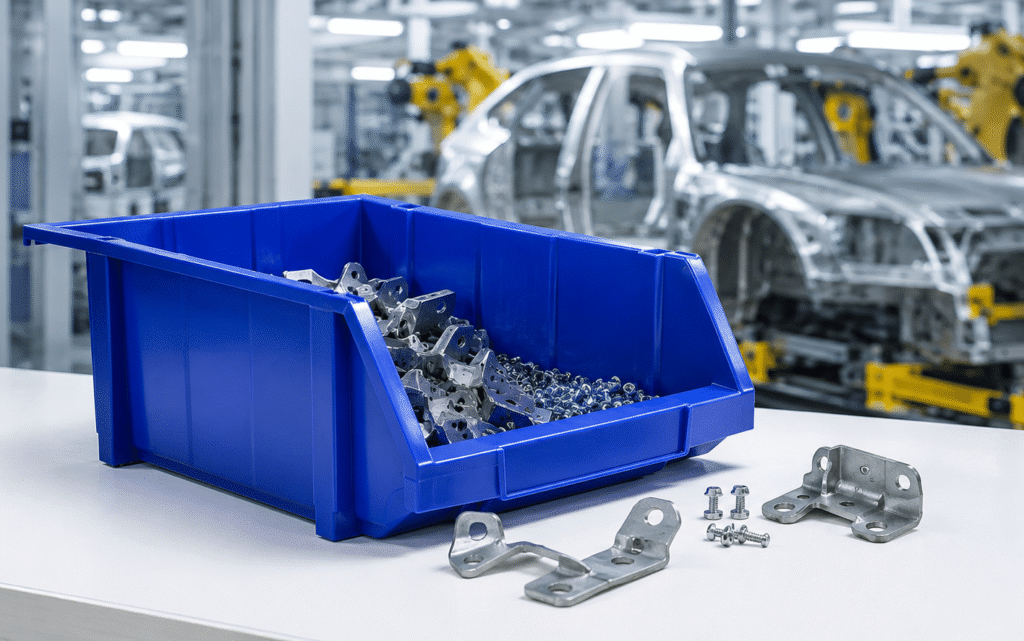
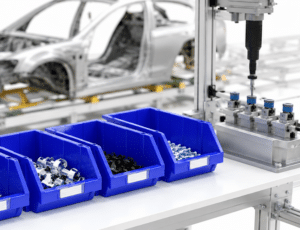
Automotive factories handle many small and medium parts every day. These parts often include fasteners, plastic clips, rubber parts, stamped metal pieces, brackets, connectors, and maintenance components. If these parts are packed in weak cartons or mixed containers, workers spend more time sorting and checking them.
Industrial plastic crates help create a cleaner handling process. Each crate can hold one part type, one batch, or one work order. This makes warehouse picking, production feeding, and returnable logistics easier to control.
Common automotive uses include:
- Engine and transmission parts storage
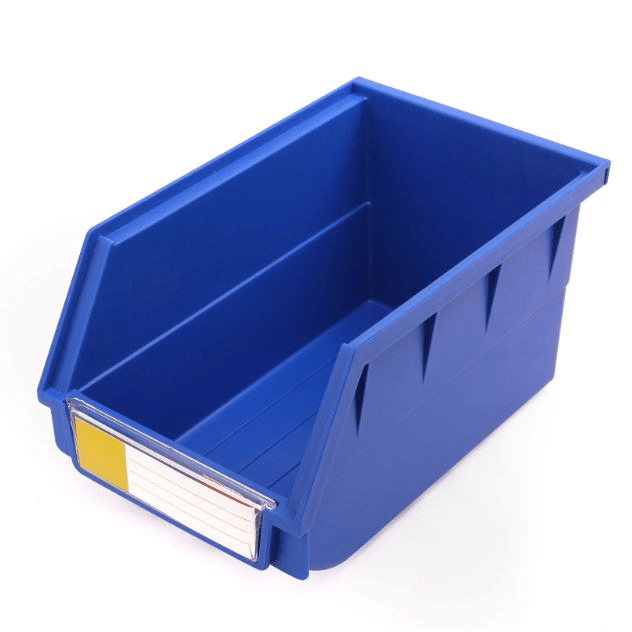
- Fastener and connector sorting
- Stamped metal parts handling
- Plastic trim and interior parts storage
- Repair and spare parts organization
- Supplier-to-factory returnable packaging
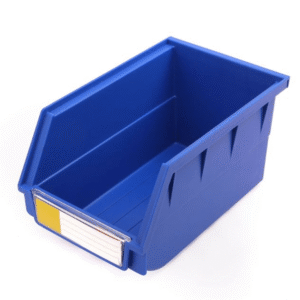
For manufacturing environments, manufacturing storage crates are often used together with pallets, shelves, carts, and workstations.
What Problems Can Industrial Plastic Crates Solve?
Industrial plastic crates mainly solve four problems: messy storage, weak packaging, part damage, and high handling waste.
| Common Problem | How Industrial Plastic Crates Help |
|---|---|
| Mixed parts | Separate parts by type, SKU, batch, or process |
| Broken cartons | Provide reusable structure for repeated handling |
| Part damage | Reduce direct contact, crushing, and messy stacking |
| Poor space use | Support stacking, nesting, or folding by model |
| Hard cleaning | Plastic surface is easier to wipe and wash than paper packaging |
TIP: Do not choose only by outer size. Inner size, wall design, handle design, and stacking structure matter more in daily use.
Which Structure Should You Choose?
Different industrial plastic crates serve different handling needs. A crate for line-side feeding is not always the same as a crate for returnable transport.
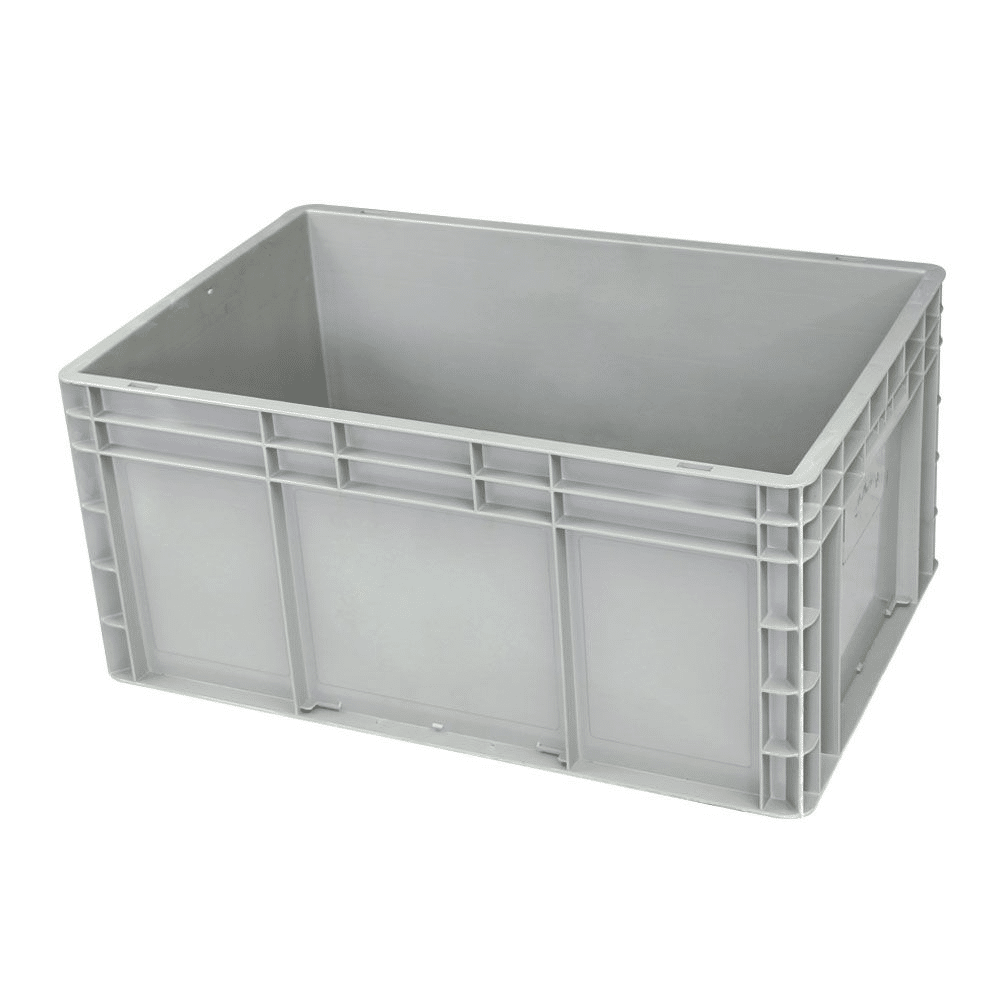
Stackable crates are suitable when full crates must be placed on top of each other. They keep goods stable and help save floor space.
Nestable crates are better when empty crates must return in bulk. They reduce empty storage space and return transport volume.
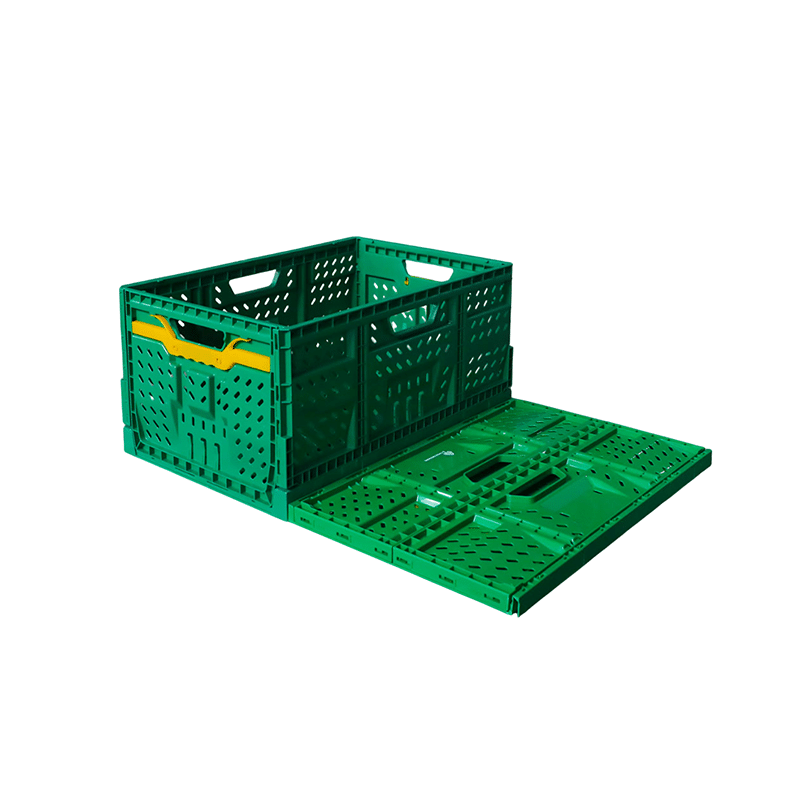
Collapsible crates are useful when freight cost and empty return space are major concerns. Collapsible plastic crates can fold down after unloading.
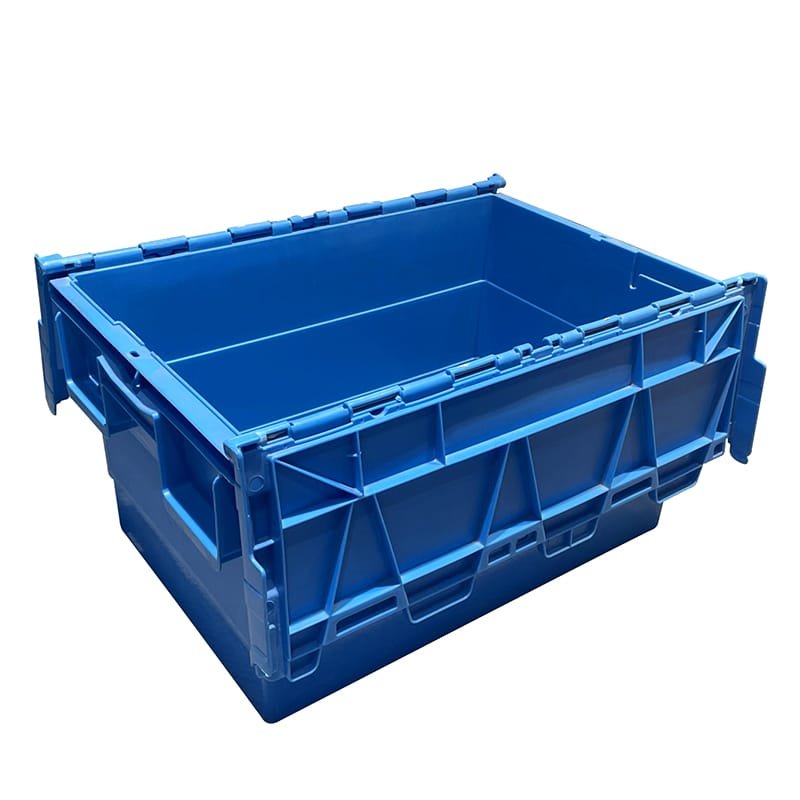
Attached-lid crates protect goods during transfer. They are suitable for parts that need better dust protection or closed-loop circulation.
Nestable logistics models such as nestable plastic logistics crates are often used when empty crate return is frequent.
Which Material Is Better: PP or HDPE?
PP and HDPE are both common choices for industrial plastic crates. PP usually offers good rigidity and shape stability, which is useful for stacking and daily warehouse handling. HDPE gives better toughness and impact resistance, which helps in rougher handling conditions.
For automotive parts, material choice depends on the part weight, edge sharpness, temperature, and handling cycle. Heavy metal parts need stronger walls and better impact resistance. Small plastic parts may need clean storage and easy picking more than extreme strength.
General material guide:
| Material | Better For |
|---|---|
| PP | Rigid storage, daily picking, stackable crates |
| HDPE | Impact resistance, rough handling, tougher warehouse use |
| Anti-static material | Electronic parts, sensitive components, ESD control |
| UV-stabilized material | Outdoor or semi-outdoor storage |
How Do You Match Crate Size to Parts?
Start with the actual part, not the catalog size. Measure the longest part, the widest part, and the usual quantity per crate. Then allow enough space for workers to pick parts without forcing them into the container.
For small parts, too much empty space creates mixing and movement. For metal parts, too tight a fit may cause scratching or make unloading slower.
A practical crate selection process:
- Confirm part size and unit weight.
- Decide quantity per crate.
- Check loaded crate weight for manual or forklift handling.
- Confirm stacking height and storage method.
- Choose open, lid, nestable, stackable, or collapsible structure.
- Request samples or drawings before bulk purchase.
TIP: For automotive parts crates, inner dimensions are more important than outer dimensions.
Are Industrial Plastic Crates Suitable for Returnable Packaging?
Yes. Industrial plastic crates are widely used in returnable packaging because they can be reused many times. In supplier-to-factory movement, they help reduce carton waste and keep parts in a stable container format.
Returnable packaging works best when the transport route is stable. If the supplier, warehouse, and factory use the same crate system, the crates can circulate smoothly.
For returnable systems, check:
- Crate nesting or folding ratio
- Label area or card holder option
- Lid or no-lid design
- Stack stability during transport
- Cleaning and inspection process
- Replacement plan for damaged crates
What Should Buyers Confirm Before Ordering?
Before placing a bulk order, buyers should confirm more than just the price. The right industrial plastic crates should match the real working environment.
Important points to confirm:
- Outer and inner dimensions
- Material grade
- Load capacity
- Stackability
- Nesting or folding design
- Handle style
- Lid option
- Color option
- Logo or marking option
- Sample availability
- Delivery time
- Packing method for export
If your team handles heavy or sharp-edged parts, request thicker walls or stronger rib design. If your team needs fast picking, choose an open crate with clear access. If your crates travel between sites, consider lids, nesting, or folding models.
Why Buy Industrial Plastic Crates from ENLIGHTENING?
ENLIGHTENING supplies industrial plastic crates for factories, warehouses, distributors, and logistics users. We focus on practical product matching instead of giving every buyer the same model.
You can share your part size, load weight, storage method, and handling route. Our team will help you compare material, structure, and size before production or bulk supply. This helps reduce wrong purchases and gives your team crates that work in daily use.
Industrial plastic crates are not a simple storage box. They are part of your warehouse flow, production feeding, and returnable packaging system. A better crate can make parts handling cleaner, faster, and easier to manage.