
Get Our Best Quotation
ENLIGHTENING will never abuse, misuse, sell, or improperly disclose the information you submit via our forms.
Toast Crates for Bakery Delivery | ENLIGHTENING
ENLIGHTENING toast crates help bakeries, distributors, and retailers move toast bread safely with stackable, washable plastic crates.
- Toast Protection
- Stable Stacking
- Easy Cleaning
Toast Crates for Bakery and Distribution Applications
Toast crates keep sliced bread and packaged toast organized after cooling, slicing, and bagging.
Toast crates protect soft bread during truck loading, route delivery, and store receiving.
Toast crates help retail chains receive bakery goods in clean, reusable containers.
Toast crates support batch handling for bread factories, distributors, and food service suppliers.
Toast crates make it easier to separate toast bread by SKU, customer, store, or delivery route.
Toast crates reduce disposable carton use and support repeated closed-loop delivery.
Toast crates improve short-term storage before dispatch while keeping bread packages neat.
Toast crates help hotels, restaurants, and catering suppliers handle packaged toast bread cleanly.
Common Pain Points in Toast Crate Applications
Do You Need Better Protection for Sliced Toast?
Toast bread can deform when crates are too deep, too weak, or poorly stacked. Proper toast crates keep products supported without excessive pressure.
Do You Need Faster Bakery Dispatch?
Mixed cartons slow down picking and loading. Standard toast crates help workers sort orders by route, store, and product type.
Do You Need Cleaner Reusable Handling?
Bakery operations create crumbs, flour dust, and moisture. Smooth plastic toast crates are easier to wash, drain, and reuse.
Do You Need Lower Return Packaging Costs?
Disposable cartons increase long-term cost. Reusable toast crates support daily return cycles between bakeries, warehouses, and retailers.
Do You Need More Stable Truck Loading?
Weak crates can slide or bend during delivery. Stackable toast crates improve load stability and reduce product damage.
Recommended Products for Toast Crate Buyers
Plastic Bread Tray
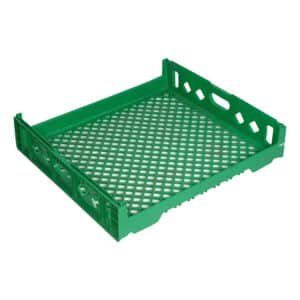
Best match for shallow toast handling, sliced bread storage, and bakery delivery.
Plastic Drying Tray
Suitable for cooling, drying, and temporary holding in bakery production areas.
Bale Arm Crate
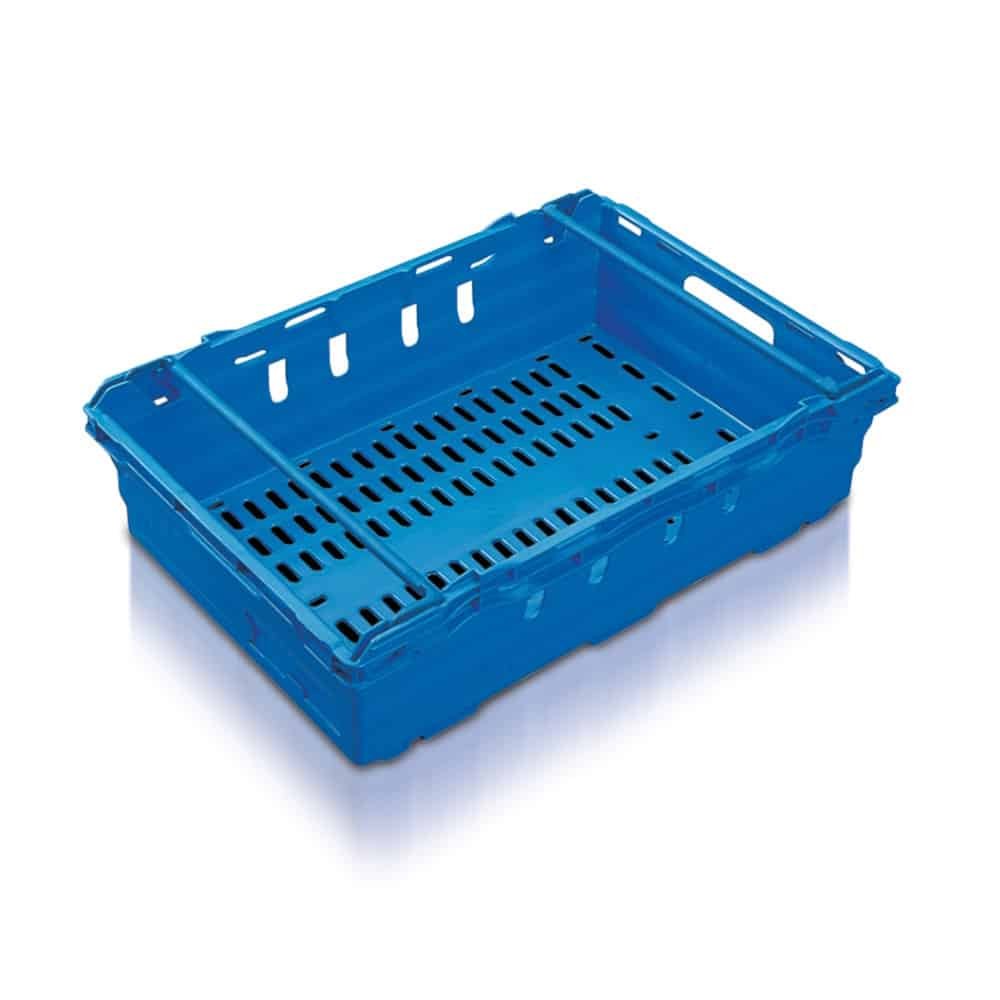
Works well for retail logistics where crates need to stack when full and nest when empty.
Plastic Beverage Crates
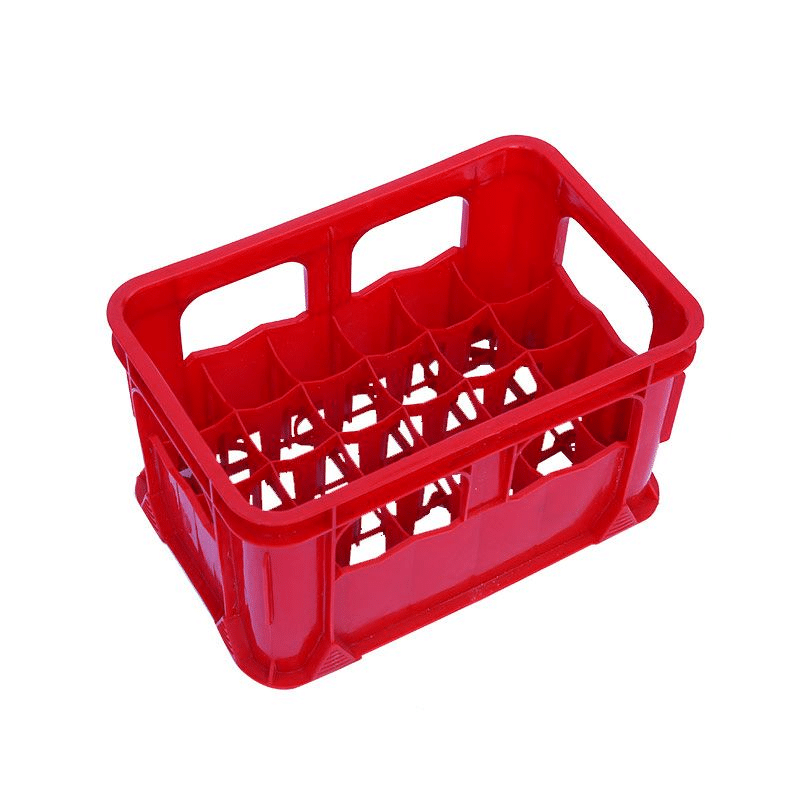
Useful for mixed food and beverage distributors with returnable crate systems.
ENLIGHTENING helps you choose toast crates by matching your toast package size, daily turnover, stacking height, route delivery method, cleaning process, and custom branding needs.
Toast Crates Material and Performance
Toast crates can be produced with material and performance options for bakery production, supermarket delivery, wholesale distribution, and returnable logistics.
| Dimension | Suitable Option for Toast Crates |
|---|---|
| PP / HDPE / PE material | PP suits rigid toast crates; HDPE suits tougher route delivery; PE can be used for flexible or cold-use requirements. |
| Impact resistance | Medium to high impact resistance is recommended for repeated loading, unloading, and empty return. |
| UV resistance | Optional UV stabilizer is suggested for outdoor yards, open truck loading, and long-term sunlight exposure. |
| Corrosion resistance | Plastic toast crates resist moisture, bakery residue, and mild cleaning agents. |
| Food grade option | Food-grade material is available for unpacked toast bread or near-food handling. |
| Anti-static option | Usually not required for bakery use, but available for special industrial environments. |
| Temperature resistance | Suitable for bakery cooling, room-temperature delivery, and selected cold-chain use depending on material. |
| Load capacity | Capacity depends on crate size, wall thickness, and stack height; toast applications focus on stable stacking and bread protection. |
How to Choose the Right Toast Crates?
Choosing toast crates means matching crate structure to toast size, packing quantity, delivery frequency, storage space, and cleaning process.
| Selection Factor | How to Choose for Toast Crates |
|---|---|
| Application | Use shallow, ventilated toast crates for sliced toast, packaged bread, buns, and bakery goods. |
| Capacity | Match capacity to toast package size, order quantity, and daily delivery volume. |
| Load requirement | Check single-crate load and stacked load during storage or truck delivery. |
| Temperature | Choose material based on bakery cooling, room-temperature delivery, cold storage, or outdoor loading. |
| Storage method | Stackable crates suit full loads; nestable or folding crates save space after delivery. |
| Stackable / nestable / collapsible | Stackable protects toast during movement; nestable and collapsible reduce empty return volume. |
| Food grade or industrial grade | Choose food-grade material when crates contact unpacked toast or near-food handling areas. |
| Indoor or outdoor use | Indoor use needs easy cleaning; outdoor use may need stronger impact and UV resistance. |
What Are Toast Crates? Toast Crates Guide
Toast crates are reusable plastic crates used for handling, storing, stacking, picking, and delivering toast bread. They are common in bread factories, bakery chains, supermarket distribution centers, food service suppliers, and wholesale delivery routes. ENLIGHTENING toast crates help B2B buyers protect soft bakery products, reduce disposable packaging, and build cleaner returnable logistics.
Key Takeaways
- Toast crates protect sliced toast and packaged bread during storage and delivery.
- Shallow, stackable designs reduce pressure on soft bread products.
- Ventilated walls support airflow and faster drying after washing.
- Nestable or folding toast crates help reduce empty return volume.
- Food-grade material is recommended when crates contact unpacked bakery products.
- Custom colors and logos help distributors control crate ownership.
TIP: Before ordering toast crates, confirm your toast package size, stack height, delivery route, washing method, and return cycle.
Where Are Toast Crates Used?
Toast crates are used wherever toast bread moves in repeated batches. They help workers replace mixed cartons with a cleaner, standardized handling system.
Common users include:
- Commercial bakeries
- Toast bread factories
- Supermarket chains
- Food service distributors
- Hotels and catering suppliers
- Bakery wholesalers
- Central kitchens
Toast crates work best in operations that need daily loading, route delivery, and empty crate return.
Why Use Plastic Toast Crates?
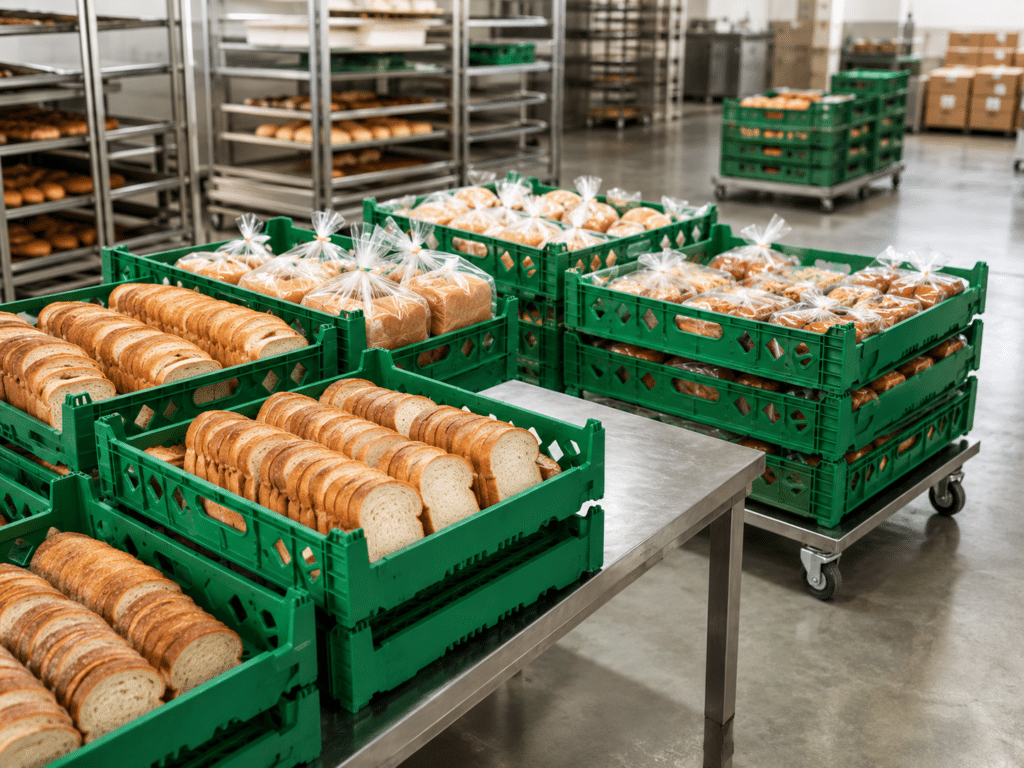
Plastic toast crates are reusable, washable, and easy to stack. Compared with cartons, they offer better shape retention during repeated delivery. Compared with metal containers, they are lighter and easier to handle.
Main benefits include:
- Better toast bread protection
- Cleaner bakery handling
- Faster order sorting
- Lower long-term carton waste
- Stable truck loading
- Easier empty crate return
- Better warehouse counting
For bakery supply chains, the biggest value is consistency. One standard toast crate size helps workers load, count, stack, clean, and return crates faster.
Which Structure Works Best?
Different toast bread operations need different toast crates.
| Structure | Best Use | Main Benefit |
|---|---|---|
| Stackable toast crates | Loaded delivery | Stable stacking and bread protection |
| Nestable toast crates | Empty return | Saves return transport space |
| Folding toast crates | Limited storage | Reduces empty storage volume |
| Ventilated toast crates | Bakery handling | Airflow and faster drying |
| Shallow trays | Sliced toast and buns | Less pressure on soft products |
| Covered crates | Protected delivery | Better dust and handling protection |
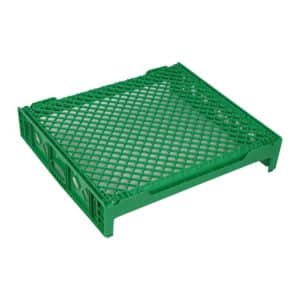
For most toast delivery routes, stackable shallow toast crates are the safest choice. For high return freight costs, nestable or folding crates may be better.
What Material Should You Choose?
PP and HDPE are the main materials for toast crates. PP gives good rigidity and stable stacking. HDPE gives stronger impact resistance for rough delivery routes.
Choose PP when you need:
- Rigid crate walls
- Clean molded appearance
- Stable stacking
- Indoor bakery handling
Choose HDPE when you need:
- Higher impact resistance
- Tougher route delivery
- Outdoor loading performance
- Better cold-use durability
Food-grade material should be selected when toast crates contact unpacked bread or work in near-food handling areas.
How Do Toast Crates Protect Bread?
Toast bread is soft and easy to deform. Poor crate depth, weak walls, or unstable stacking can press the bread and damage its shape.
Good toast crates protect bread through:
- Reinforced corners
- Smooth inner walls
- Correct crate depth
- Stable bottom support
- Proper stacking clearance
- Rounded handling edges
TIP: Do not choose toast crates only by load capacity. For soft toast bread, inner height and stacking clearance matter more.
Custom Options from ENLIGHTENING
ENLIGHTENING supports custom toast crates for bakery chains, wholesalers, and distributors.
Available options include:
- Custom color
- Logo printing
- Embossed logo
- Food-grade material
- PP or HDPE material
- Stackable, nestable, or folding structure
- Label area
- Bulk export packing
Color coding can separate routes, customers, product types, or hygiene zones. Logo marking also helps reduce crate loss in returnable delivery systems.
Buyer Checklist Before Ordering
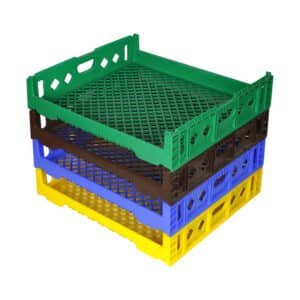
Prepare these details before buying toast crates:
- Toast bread size
- Packed or unpacked handling
- Required crate dimensions
- Daily turnover quantity
- Stacking height
- Truck loading method
- Empty return method
- Cleaning process
- Indoor or outdoor use
- Food-grade requirement
- Color and logo needs
- Target order quantity
With these details, ENLIGHTENING can recommend toast crates that match real bakery handling instead of only offering a standard catalog model.
Final Advice
Toast crates should fit your bread size, workers, storage racks, delivery trucks, cleaning process, and return system. A low-cost crate can become expensive if it bends, stacks poorly, traps residue, or damages bread.
Choose toast crates based on real operating conditions. ENLIGHTENING can help you compare sizes, materials, structures, and customization options for a stable bulk supply plan.
Toast Crates FAQS
What are toast crates used for?
Toast crates are used for storing, stacking, picking, and delivering sliced toast bread and packaged bakery products.
Are toast crates suitable for food contact?
Yes, food-grade material options are available when toast crates contact unpacked bread or near-food handling areas.
Should I choose stackable or nestable toast crates?
Choose stackable toast crates for loaded delivery strength and nestable crates when empty return space is a major cost.
Can ENLIGHTENING customize toast crates?
Yes, ENLIGHTENING can customize color, logo, material, size, structure, and food-grade options for bulk orders.
How do I choose the right toast crate size?
Match the crate size to your toast package dimensions, loading quantity, stacking height, delivery route, and cleaning method.