
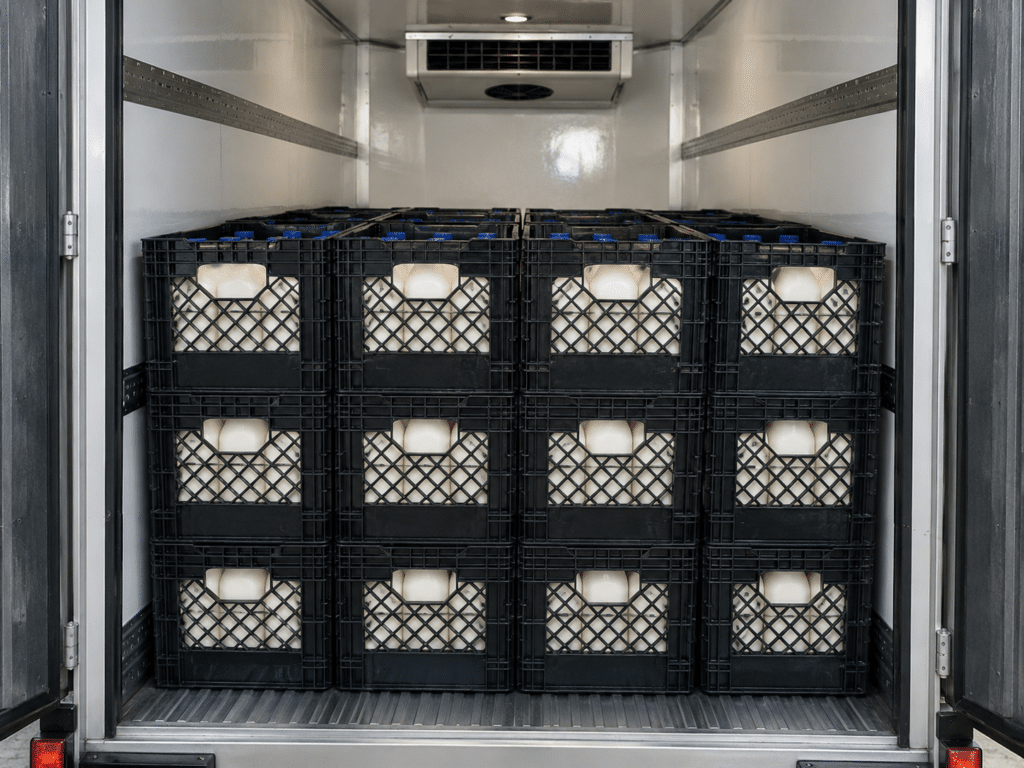
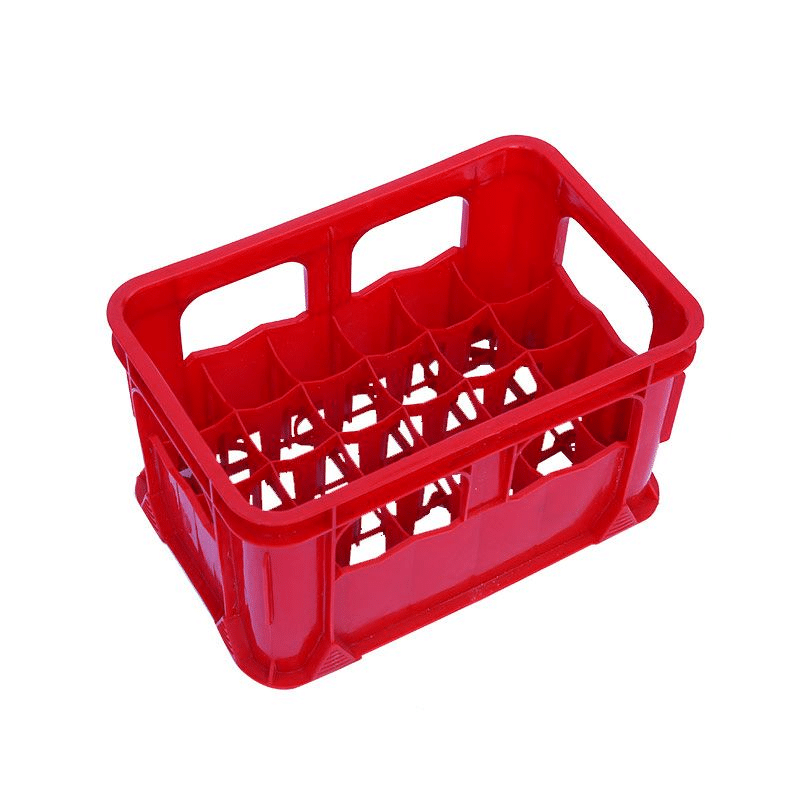
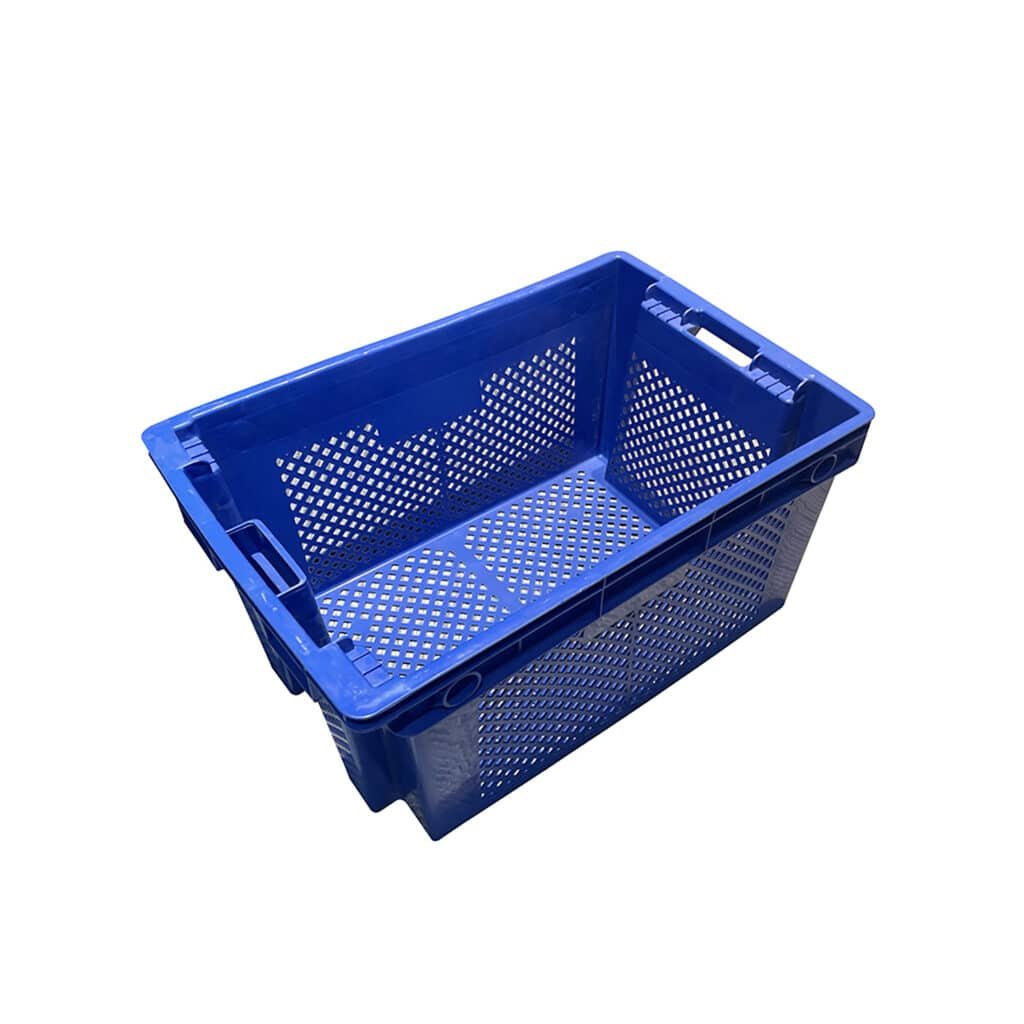
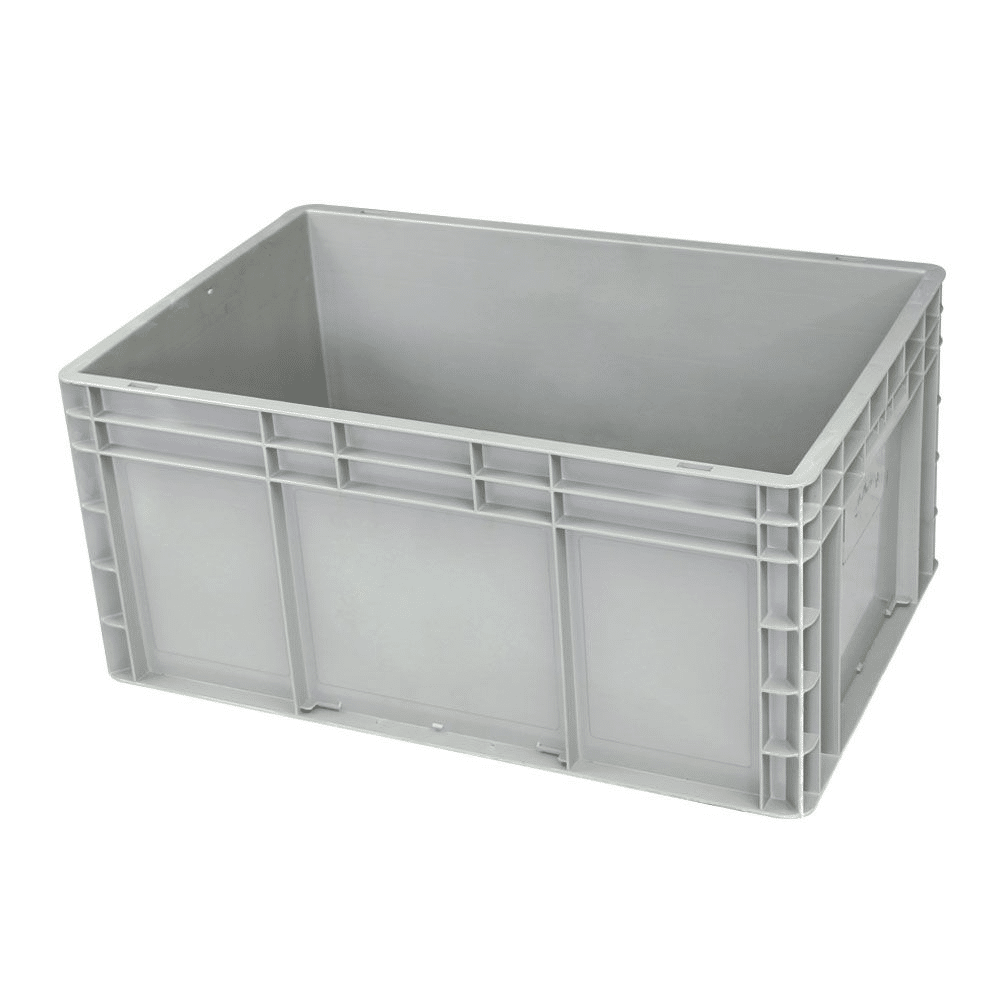
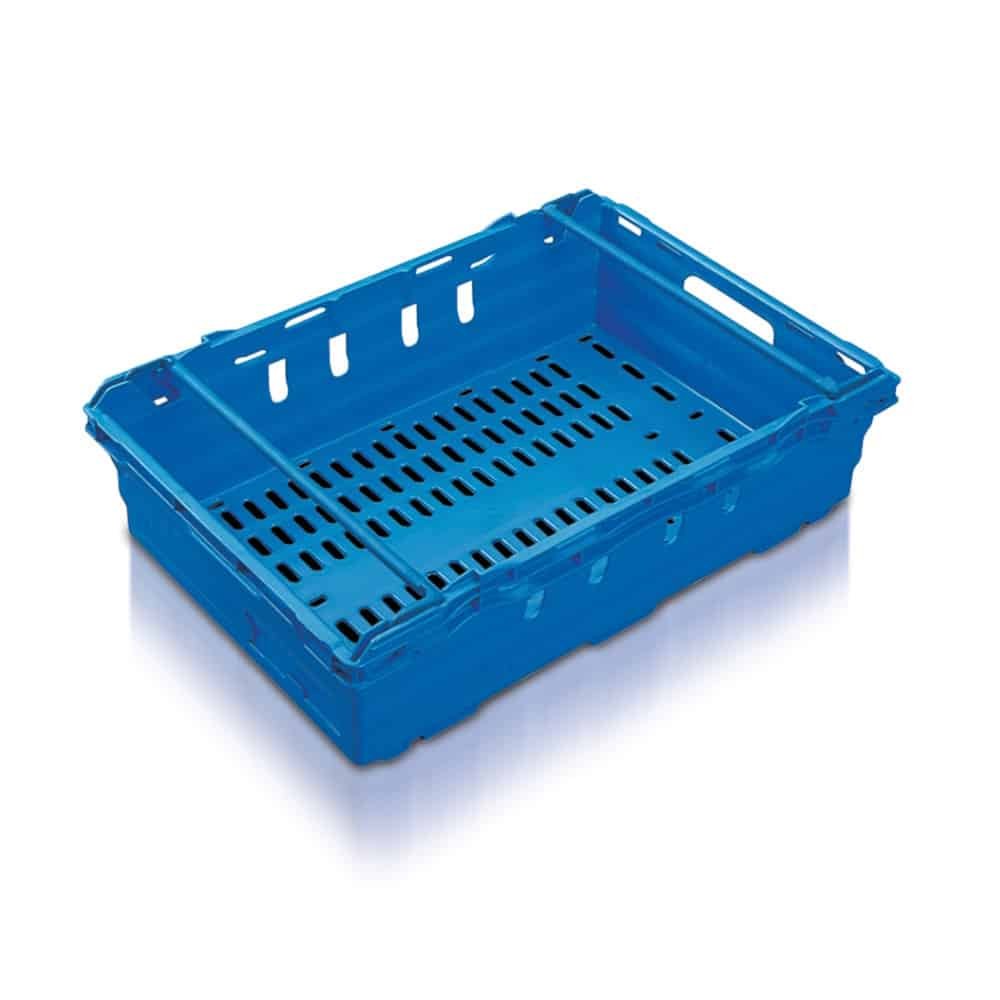
Dairy milk crates are reusable plastic containers used to store, move, stack, deliver, and return milk bottles, milk cartons, yogurt packs, and other dairy packaging. They are designed for daily handling in dairy plants, cold rooms, route delivery trucks, retail distribution, and returnable packaging systems.
For dairy companies, dairy milk crates are not just simple storage boxes. They affect delivery speed, product protection, warehouse stacking, cold chain handling, and long-term packaging cost.
Key Takeaways
- Dairy milk crates are built for repeated dairy delivery and return cycles.
- PP and HDPE are the most common materials for strong plastic milk crates.
- Stackable crates are better for loaded storage and truck transport.
- Nestable or folding crates help save space during empty return.
- Food-grade material, smooth surfaces, and easy washing matter in dairy use.
- Custom colors and logos help dairies manage routes, product lines, and brand identity.
TIP: Before choosing dairy milk crates, confirm your bottle size, crate load, stack height, cold storage temperature, and cleaning method.
Why Do Dairy Companies Use Plastic Milk Crates?
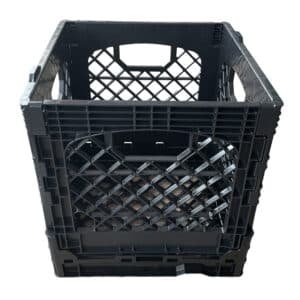
Dairy products move fast. Milk bottles and cartons often travel from processing plants to cold rooms, trucks, retail stores, schools, hotels, restaurants, and local distributors. During this process, packaging must handle frequent lifting, stacking, moisture, washing, and temperature changes.
Dairy milk crates help solve these problems because they are reusable, washable, and strong enough for daily route delivery. Compared with disposable cartons, plastic dairy milk crates can support a closed-loop system where crates are returned, cleaned, and reused many times.
Main benefits include:
- Better bottle protection during loading and unloading
- Easier counting and sorting by delivery route
- Cleaner handling in wet or chilled areas
- Safer stacking in cold rooms and trucks
- Lower packaging waste in repeated delivery systems
- Better brand control with custom crate color and logo options
For beverage-style dairy packaging, Plastic Beverage Crates are often a practical structure because they are made for repeated bottle handling.
Where Are Dairy Milk Crates Used?
Dairy milk crates are used across the full dairy supply chain. Different users may need different crate sizes, materials, and structures.
| Use Area | Common Requirement |
|---|---|
| Dairy Processing Plant | Sorting, temporary storage, batch handling, cold room movement |
| Cold Chain Warehouse | Stable stacking, moisture resistance, easy cleaning |
| Refrigerated Truck | Impact resistance, stack stability, fast loading |
| Retail Distribution | Easy counting, fast unloading, route identification |
| Schools and Catering Supply | Strong reusable crates for daily milk delivery |
| Return Collection | Nesting, folding, or easy stacking for empty return |
In high-turnover dairy plants, Plastic Turnover Crate options can also support sorting, temporary storage, and repeated internal movement.
What Structure Should Dairy Milk Crates Have?
A good dairy milk crate should match the bottle or carton size first. A crate that is too large allows bottles to move during transport. A crate that is too small creates loading difficulty and may damage packaging.
Key structure points:
- Reinforced corners: help the crate handle stacking pressure.
- Strong bottom design: supports the full product weight during transport.
- Ventilated side walls: allow air flow in cold storage and help reduce trapped moisture.
- Smooth inner walls: reduce bottle scratches and make cleaning easier.
- Stacking ribs or locating points: help loaded crates stay aligned.
- Handle openings: support manual handling during daily delivery.
For return systems where empty storage is expensive, Plastic Nestable Crates can reduce return volume when the crate design matches the dairy route model.
TIP: Do not choose a dairy crate only by outside size. Internal length, width, and height matter more for bottle fit.
PP or HDPE: Which Material Is Better?
Both PP and HDPE can be used for dairy milk crates. The better choice depends on your working condition.
| Material | Best Use | Main Advantage |
|---|---|---|
| PP | Normal chilled dairy handling and rigid stacking | Good stiffness and stable shape |
| HDPE | Cold rooms, rough route delivery, frequent impact | Better toughness and impact resistance |
| PE | Special flexible packaging needs | Less common for rigid dairy crates |
PP is often selected when the buyer needs a stiff crate that keeps its shape under normal warehouse and delivery use. HDPE is better when crates face rough loading, low temperatures, or repeated impact.
For buyers who also handle returnable beverage packaging, a beverage crate structure may be more suitable than a general storage crate.
How Much Weight Can Dairy Milk Crates Hold?
Load capacity depends on crate size, material, wall thickness, bottom design, and stacking height. In many dairy delivery applications, a crate may carry 15–30 kg of milk bottles or cartons, but the final load must be confirmed by product drawing and test data.
A simple way to calculate your needed load:
| Check Point | Example |
|---|---|
| Product Weight | 24 bottles × 1 kg milk = about 24 kg |
| Crate Weight | Add the crate’s own weight |
| Handling Safety | Add extra allowance for lifting, truck vibration, and stacking |
| Stacking Requirement | Confirm how many loaded crates will be stacked in cold storage or trucks |
Loaded dairy milk crates need enough bottom strength for lifting and enough side-wall strength for stacking. If your crates will be stacked high in cold rooms, ask the supplier for stacking load data, not only single-crate load data.
Stackable, Nestable, or Folding: Which Is Better?
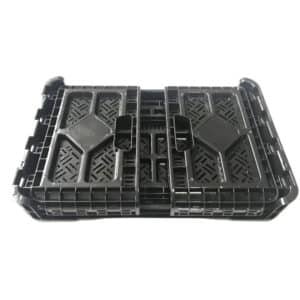
Most dairy milk crates are stackable because loaded crates must stay stable in cold rooms and delivery trucks. However, some buyers also care about empty return space.
| Structure | Best For | Buyer Note |
|---|---|---|
| Stackable | Loaded milk storage and truck transport | Best for strength and stacking safety |
| Nestable | Empty return and storage space saving | Check if loaded stacking is still stable |
| Folding | Low empty return volume | Less common for heavy bottled milk, but useful for mixed delivery systems |
For a mixed distribution system, Plastic Folding Crate may help reduce empty return volume, especially when the crate is used for lighter dairy packs or retail delivery.
How Do Dairy Milk Crates Support Cold Chain Handling?
Milk products need stable chilled handling. Crates must work in cold rooms, refrigerated trucks, and wet loading areas. In these environments, weak packaging may deform, absorb moisture, or become hard to clean.
Dairy milk crates support cold chain handling in several ways:
- Plastic material resists cold room humidity.
- Ventilated walls support air movement around packed products.
- Rigid stacking helps reduce product movement during transport.
- Smooth surfaces make washing and drying easier.
- HDPE options provide better toughness in colder conditions.
For refrigerated delivery, the crate should also allow workers to load and unload quickly. Handle design, crate weight, and stacking alignment all affect daily labor speed.
TIP: For outdoor depots or open loading areas, request UV-stabilized material. Cold chain use does not always mean indoor-only use.
Why Does Hygiene Matter in Dairy Crates?
Dairy products are sensitive to odor, residue, and poor cleaning. Even when crates do not directly touch the food, they are often used in food processing areas, cold rooms, and retail delivery systems.
Good dairy milk crates should have:
- Smooth surfaces that are easy to wash
- Limited dirt-trapping corners
- Stable material that does not absorb moisture
- Food-grade material options when required
- Good drainage and ventilation after washing
- Color options for route or product separation
If crates are used inside dairy plants or near food handling areas, food-grade material should be confirmed before production.
Can Dairy Milk Crates Be Customized?
Yes. Dairy milk crates can be customized by size, color, logo, handle style, bottom design, stacking structure, and material formula.
Common customization options include:
- Custom color for dairy brand identity
- Molded logo or hot-stamped logo
- Bottle divider design
- Reinforced bottom structure
- UV-resistant material
- Food-grade material
- Barcode area or label area
- Different crate sizes for different milk bottle formats
Brand owners and distributors often use different crate colors for different delivery routes, product lines, or retail channels. This makes warehouse sorting easier and reduces picking mistakes.
For retail and route delivery systems, Bale Arm Crate designs can also help with stacking and handling flexibility.
What Should Buyers Confirm Before Ordering?
Before placing a bulk order, buyers should confirm all real working conditions. A crate that looks correct in pictures may not fit the actual bottle, truck, or cold room stacking method.
Use this checklist:
| Buyer Check | Why It Matters |
|---|---|
| Bottle or Carton Size | Confirms internal crate fit |
| Product Weight | Determines load requirement |
| Stack Height | Affects wall and corner strength |
| Cold Room Temperature | Helps choose PP or HDPE |
| Truck Loading Method | Affects impact and stacking needs |
| Washing Method | Confirms heat and chemical resistance needs |
| Return Logistics | Decides stackable, nestable, or folding structure |
| Branding Need | Confirms color, logo, and mold options |
If you use dairy milk crates in a closed-loop system, the return cycle is just as important as the delivery cycle. Empty crates also take space, labor, and truck volume.
How Can a Factory Help You Choose Faster?
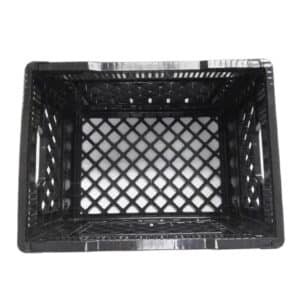
A professional crate manufacturer should not only ask for quantity. The supplier should ask about your product size, load weight, cold chain conditions, stacking method, washing process, return cycle, and branding needs.
ENLIGHTENING can help buyers compare crate structures and recommend a practical option based on real dairy handling needs. For many buyers, choosing the right dairy milk crates means fewer broken bottles, cleaner handling, faster sorting, and better return management.
A good supplier should provide:
- Existing mold options
- Size and load data
- Material recommendations
- Custom color support
- Logo customization
- Sample confirmation
- Bulk production planning
- Export packing advice
For dairy plants, wholesalers, and distributors, factory-direct support can reduce selection mistakes before bulk orders.
Final Buying Advice
Dairy milk crates should be selected by use case, not only by price. A cheaper crate may cost more later if it breaks during route delivery, stacks poorly in cold rooms, or wastes space during return transport.
The right dairy milk crates should match your bottle size, load weight, temperature, stacking height, cleaning method, and delivery route. For long-term use, material quality and structure design matter more than small price differences.
ENLIGHTENING supports standard and custom dairy milk crates for dairy plants, beverage distributors, retail supply chains, and returnable packaging systems.